Category: Vegan made Cheaper

  • How I Save Money on Herbs and Spices

    How I Save Money on Herbs and Spices

    One sneaky expense of cooking from scratch is those darn little bottles of herbs and spices. We love cooking a lot of different ethnic food, which means lots of lovely flavors, but we’re a big family and the costs of all those seasonings add up!

    The good news is, you don’t have to pay for those pricey grocery store bottles. Here’s my best advice on how to approach spices, where to shop for them, and how to store them to maximize your money.

    Start at Costco

    If you have a Costco (or Sam’s Club?) membership, start there for spice shopping.

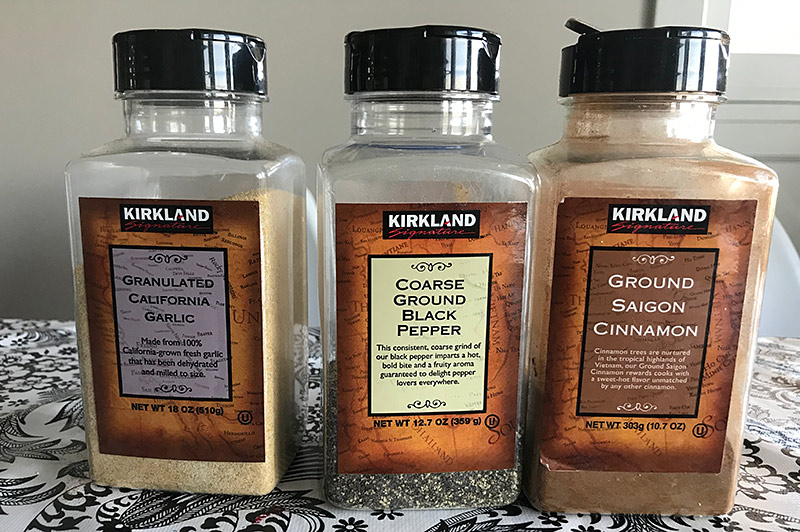
    Cinnamon is practically a food group around here because we use it so liberally on oatmeal and muesli. One of the principles of lowering your grocery budget is pay attention to the things you eat/buy often, because savings there move the needle more.

    We also buy dried onion, garlic powder, ground black pepper, and a salt-free seasoning blend at Costco. Pretty much anything they sell that we use often is a good candidate.

    To give you an idea of how much you can save this way:

    Today at Safeway, I could buy a 2.37 oz bottle of cinnamon for $3.49 (McCormick), $2.49 (Private Selections), or $8.49 (Morton & Bassett).

    Today at Costco, I could buy a 10.7 oz bottle of cinnamon for $3.49. It’s great cinnamon, and even if Morton & Bassett is better, I don’t value it as 11x better. Yet, it’s 11 times the price per ounce!
    Find Your Local Ethnic Food Stores

    I don’t know where you live, but chances are there is a Mexican food market and/or an Asian food market somewhere in your vicinity that you might not even be aware of. They tend to be located in non-descript strip malls, so they can be easy to overlook.

    They are a GOLD MINE for inexpensive spices.

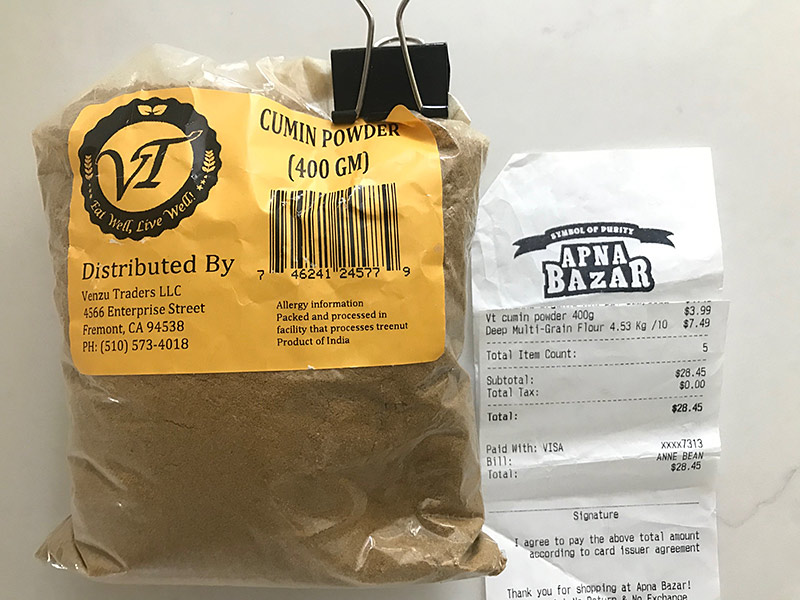
    Today you can buy ground cumin from Safeway for $3.99 for a 1.5 oz plastic bottle. That same $3.99 price tag bought me a 14 oz bag of ground cumin at Apna Bazar. Even the big bulk bottle of ground cumin at Safeway is $9.49 for 4.5 oz. I paid essentially $1.27 for that amount simply because I ventured into an Indian grocery store instead.
    Is there a difference in quality? Maybe. I haven’t found personally found that to be the case (except for the superior quality of Penzey’s, mentioned later).

    For most people, the only different in quality they might notice is if a spice is less fresh or potent. The solution for a spice that is less potent is simply to increase the amount you use. The cumin I bought from Apna Bazar was lovely and flavorful, but if I theoretically did need to add more if it, it certainly wasn’t 9 times more! 🙂

    Look for Bulk Bins

    If you’re trying a new recipe and only need a little of a spice, purchase it in the bulk bins! You won’t need to buy a whole bottle of something you won’t use again, and the price is often less per ounce. This is a cost saver, as long as you aren’t too heavy handed. You can even bring a tablespoon measurer after you’ve put some in your bag to help you estimate if you’re in the right ball park.

    Remember to Shop at YOUR Grocery Store

    Take the time to create a price list of your local grocery stores, so that when you do your regular shopping, you’re continually reaping the savings. It wouldn’t make sense to include every spice you use on your price list, but if you just compare a handful of spices from store to store, you’ll find a pattern that points to YOUR best store to shop for spices.

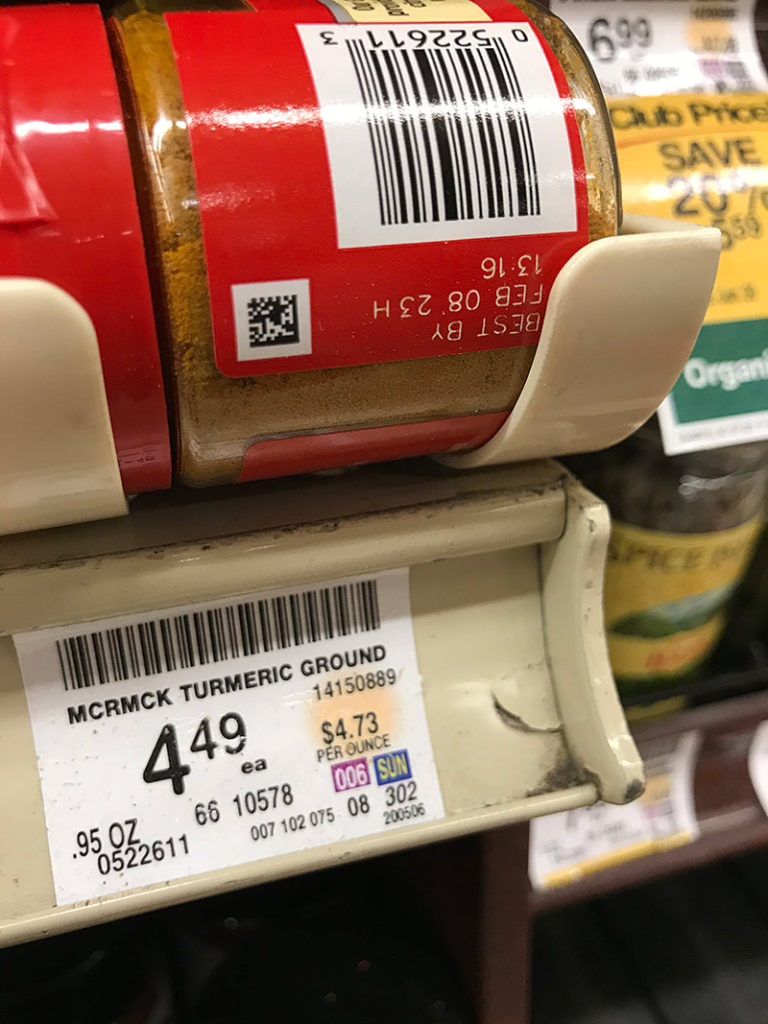
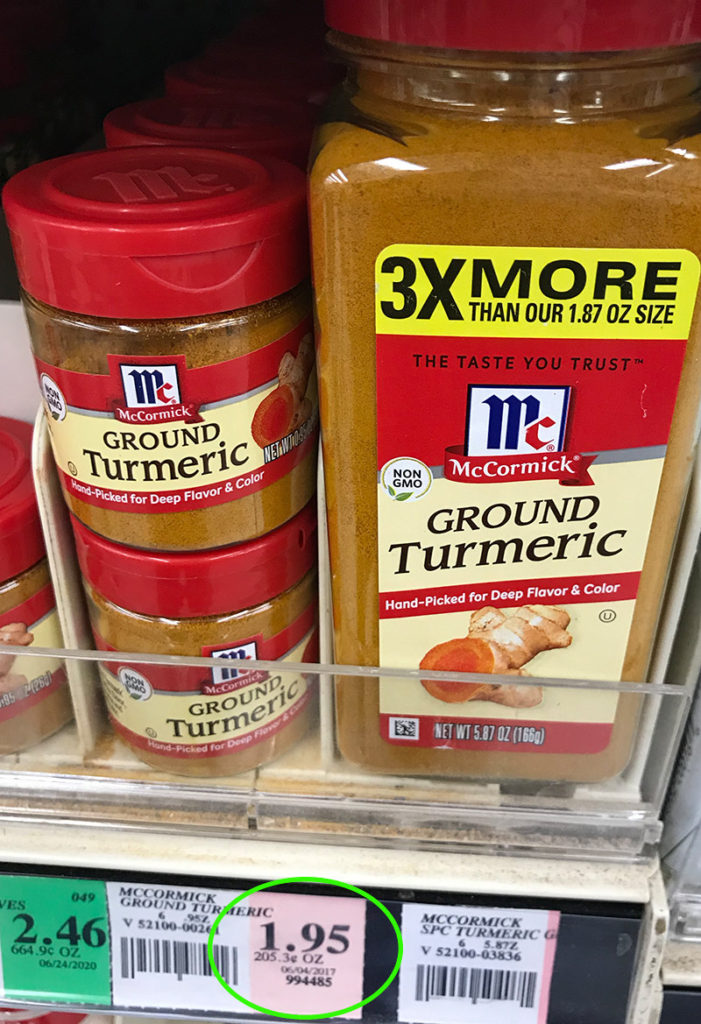
    I compared my local Winco with my local Safeway and found that Safeway was often twice the price for the little spice bottles:
    Look all the Options (and Check the Cost per Ounce!)

    Even if you’re at the right store, you’ll likely have a flood of options.

    Of course the store doesn’t line up all the bottles of turmeric next to each other so you can compare. You have to check for every brand and every size bottle! Fortunately the cost per ounce is listed on the label, so it takes less than a minute and can save you a dollar or more per spice. I don’t make $60/hr while grocery shopping very often, so it’s worth my time to scan the shelves a bit!

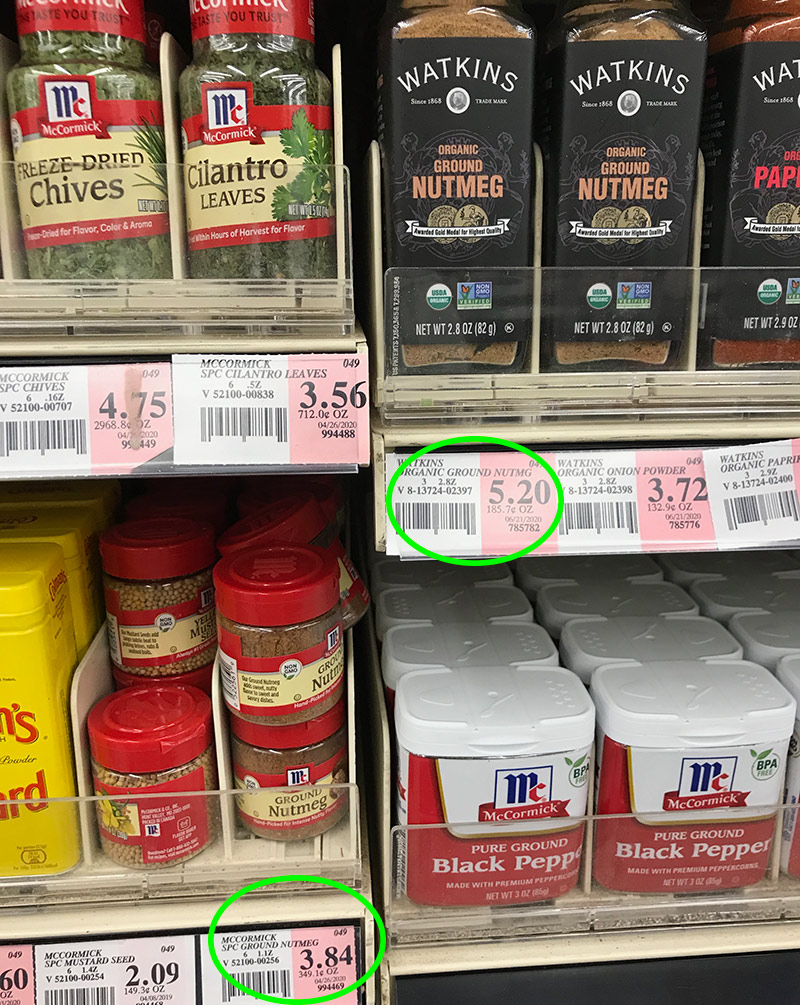
    In this photo, you can see that a bigger bottle of fancy-pants organic nutmeg was almost half the price per ounce of the more standard McCormick nutmeg (185.7 cents vs. 349.1 cents per ounce):
    Don’t forget to check the ethnic sections even within the store: At Safeway, the cheapest curry powder in the spice aisle is $7.49 for 1.75 oz. If you look with Mexican food, however, you’ll find a baggy of curry powder for $1.99 for 1.5 oz. That’s a much better price, and definitely worth getting to see how you like the flavor! If you try it and like it, you’ll save $5 every time you buy curry powder.

    Consider Penzey’s Spices

    This is not a sponsored post at all. Penzey’s doesn’t know I exist!

    We used to live just around the corner from a Penzey’s Spice Shop and I loved walking over there with my little kids to peruse the gorgeous arrays of flavors from around the world. They have samples to sniff and cool descriptions to help you distinguish between Turkish Oregano and Mexican Oregano, or Sweet Paprika and Half-Sharp Paprika. They often throw in free bottles and stickers with your order and ours had the sweetest older ladies working there.

    The good news for my budget was that although their prices are top-quality, they are very affordable when you buy them in bulk bags, rather than in the glass jars.
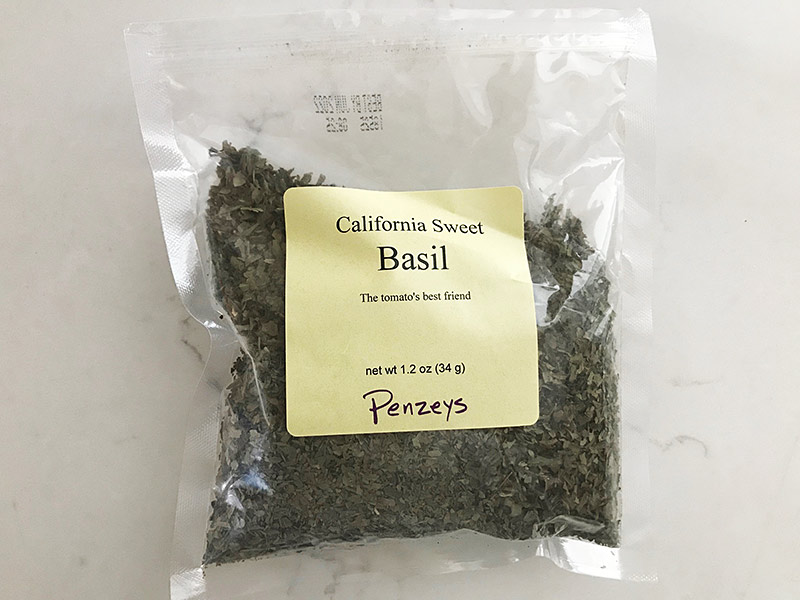
    We don’t have one close by anymore, but we still often choose to stock up on spices by buying them online (they even sometimes have sales!) through penzeys.com .

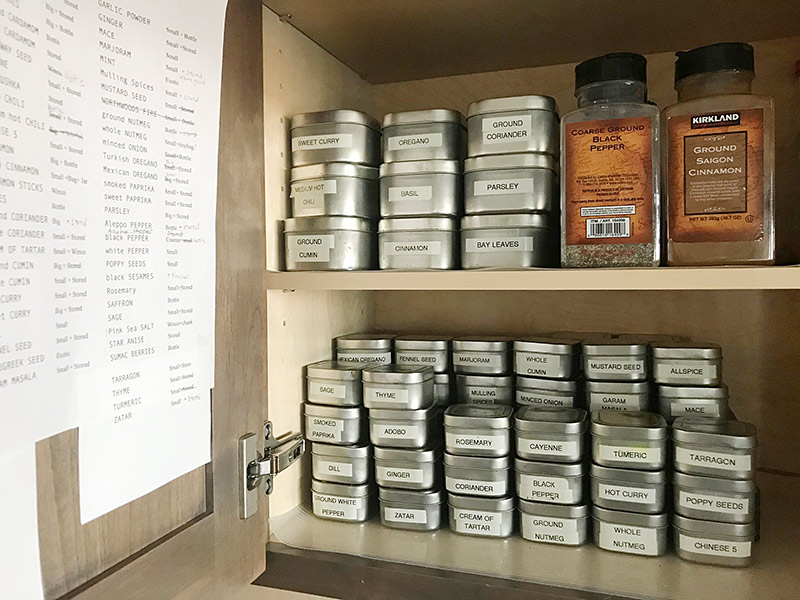
    Ten years ago we spent $50 getting a whole bunch of square tin containers from Specialty Bottle in two different sizes. The bigger size was reserved for spices we used most.
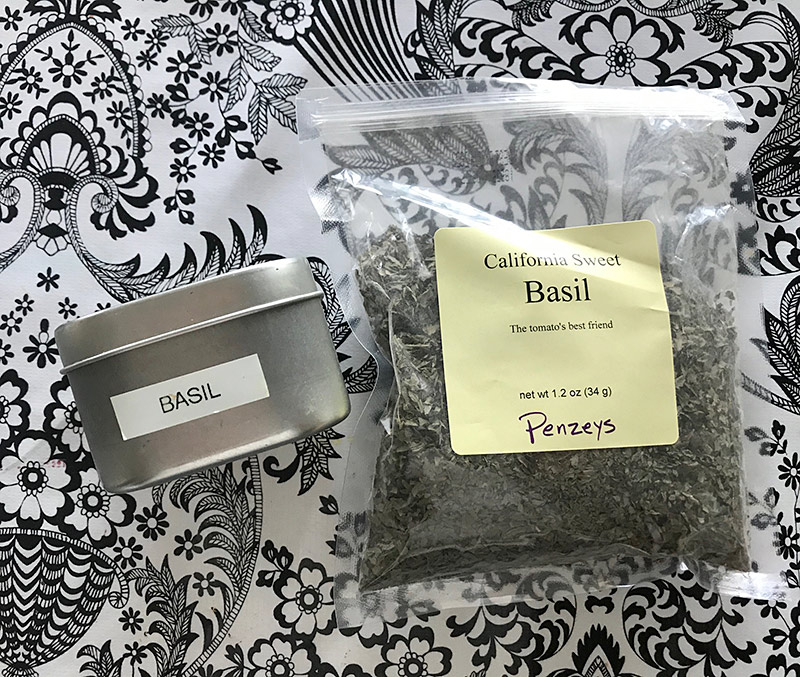
    With a little label making magic, these have been work horses for over a decade. I can tell at a glance where things are without alphabetizing.
    (I do have a cardboard box in my pantry with all the bulk bags for refilling the containers every handful of months, and I go ahead and just keep the big Costco bottles next to the cute containers because I don’t want to mess with refilling those.)

    Here is a price comparison:

    Safeway McCormick Oregano is $3.99 for .75 oz, Spice Island Oregano is $6.99 for .6 oz. Penzey’s is $6.69 for .8 oz, but it’s $14.95 for a 3.2 oz bag. So when I purchase a large quantity, it’s slightly cheaper than I could buy at the grocery store, and the quality is outstanding.

    Spice Inventory List

    I don’t consider myself a highly organized person. At all, actually.

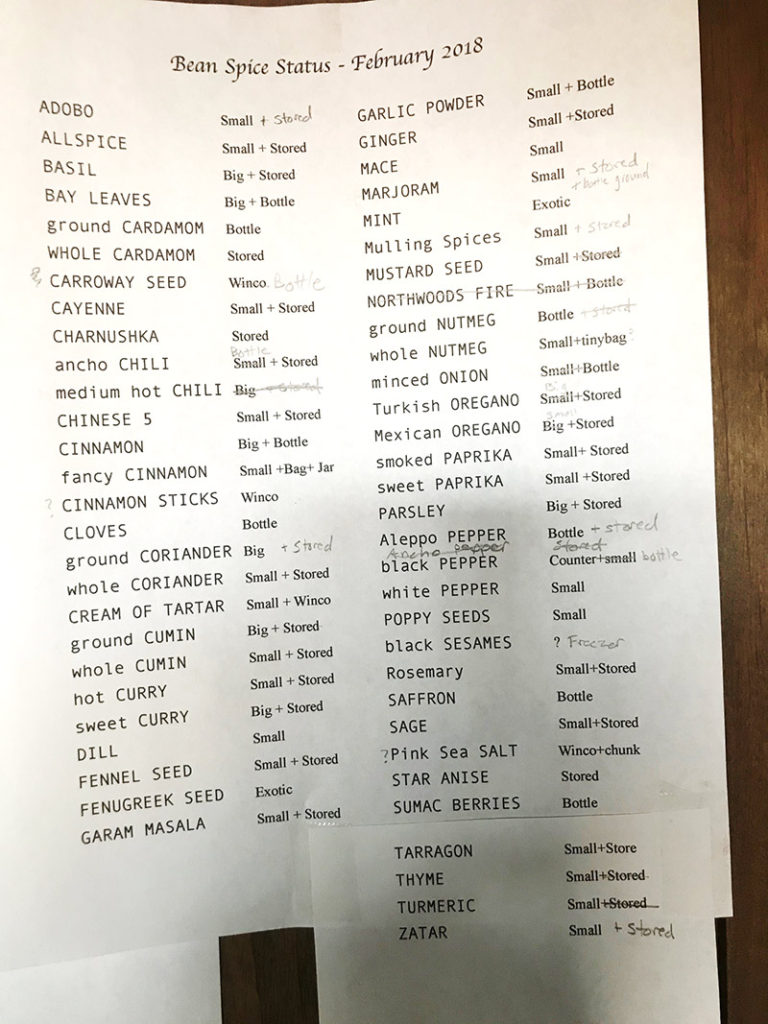
    But I do have a piece of paper taped inside my cupboard that is alphabetized. I can quickly check our status on the obscure spices we have accumulated and easily note the ones I’ll want to purchase the next time we place an order at Penzeys, so that I will order enough to qualify for free shipping of course!

    I’ve been marking this particular copy up for several years, just erasing and re-writing as needed.
    Proper Spice Storage and Shelf Life

    There is a lot of information out there about how to pamper your spices.

    Here’s your dose of reality from a real mom: I keep my spices in a dark place at room temperature AKA my kitchen cupboard and a cardboard box in my pantry, because heat and light will shorten their shelf-life. However, I don’t sweat expiration dates. We tend to use up most of our spices within a year or so, but the more obscure ones might sit around longer and lose some potency. I just add a slightly greater amount to the recipe for more flavor if I need to!

    Buying whole spices and grinding them fresh (for things like cumin and coriander, for example) will extend their shelf life. Storing spices in the fridge or freezer will extend their shelf-life. But I just keep mine in the cupboard and it’s worked great for over a decade.

    So, there ya go. Make delicious food, save money, and stress less.
  • The Number One Way to Save Money on Vegan Groceries

    The Number One Way to Save Money on Vegan Groceries

    You’re not going to like it. I’ve got lots of tricks up my sleeve to keep our grocery budget trim, but this one is going to hurt a little.

    The very best way to save money on vegan groceries is….

    Waste less food.

    See? No one likes to acknowledge the wilty lettuce that got shoved to the back of the fridge or the questionable cooked brown rice that overstayed its welcome, and we certainly don’t want to think that we paid money for them!

    Of course we don’t buy things intending not to eat them, yet a recent study estimates the average American household as wasting around 30% of the edible part of food they buy. That percentage is statistically higher when the household is eating a “healthier” diet. Ouch.

    When you eat a whole food plant-based diet, that often means a lot of produce.

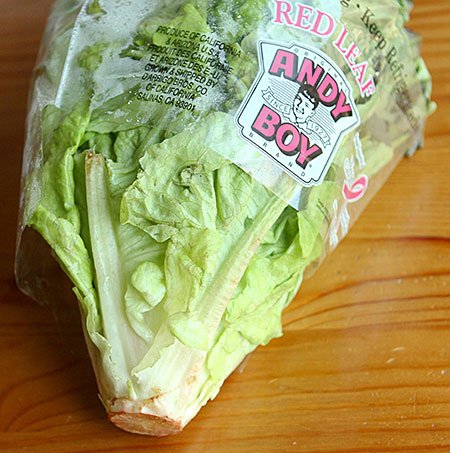
    Lovely, vibrant, fresh and crisp produce. At least, it is that way when you bring it home! Give it a few days, especially when you store it improperly, and that produce is not looking as lovely. It may even be giving you some guilt trips whenever you open the fridge.

    Not wasting food is easier said than done, but here are 5 simple, actionable ways to reduce the food you waste, and hence cut your grocery budget. Every bit of food you throw away is like tossing money in the trash, so it’s worth upping our game a bit.

    #1 Store Your Produce More Carefully

    This deserves a whole blog post on its own, but suffice it to say that many people are halving the life span of their produce just by not taking care when they get back from the market. Here are some quick tips:

    1. Pop your fridge produce right in there as soon as you get back. Any time spent at room temperature will take a toll on your most fragile food (leafy greens!)
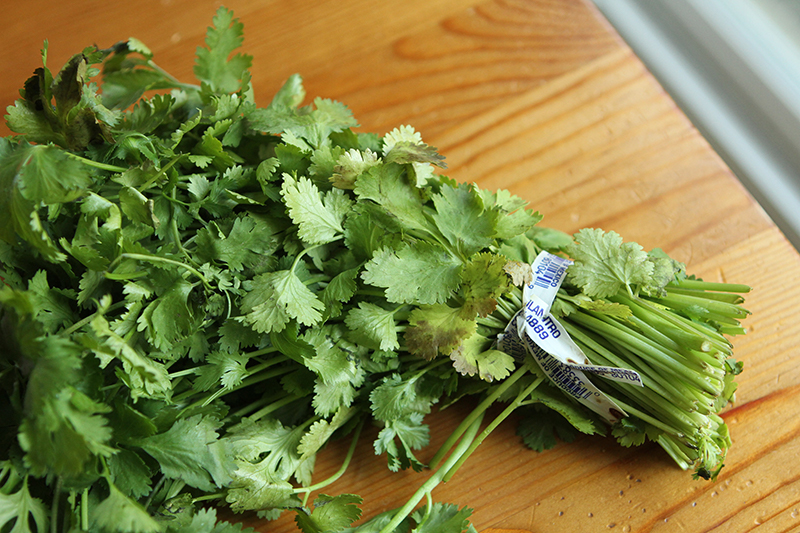
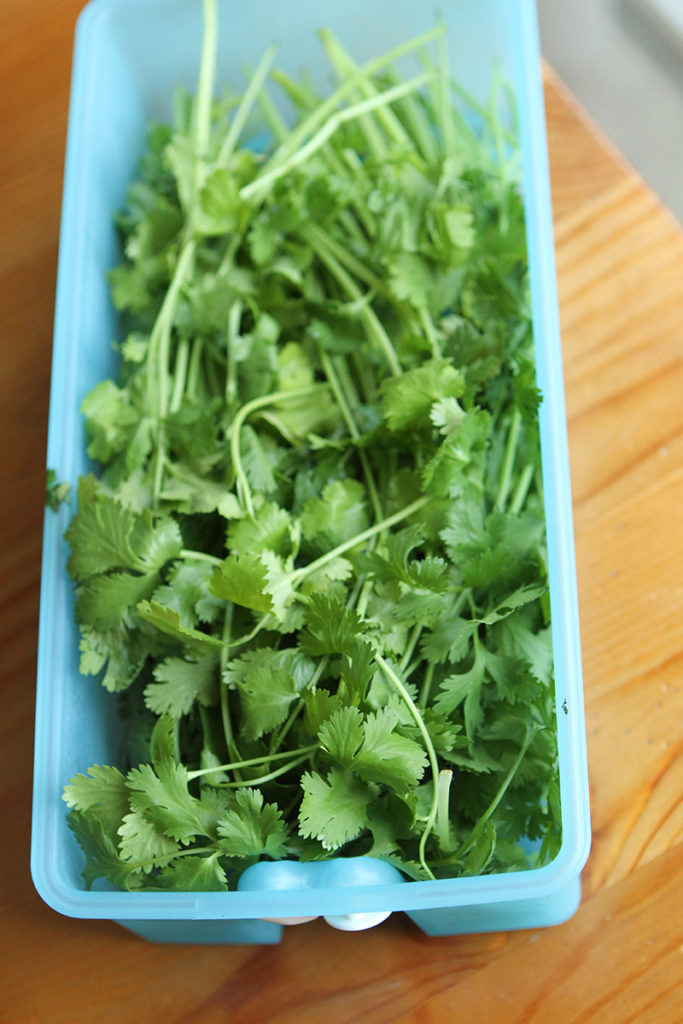
    2. Cilantro will last a week if you take a minute to unbunch it and toss all the slimy parts as soon as you bring it back from the store. You can leave it in the produce bag as long as it’s not wet in there, or store it in a tupperware.

      Here’s 7 days left in a bunch (wilty and has slimy and yellow bits, though still salvageable):

    This bunch was bought at the same time but stored properly and it looks better after a week than when I brought it back from the store!

    3. Apples go in the fridge. They’ll stay crisper much longer.

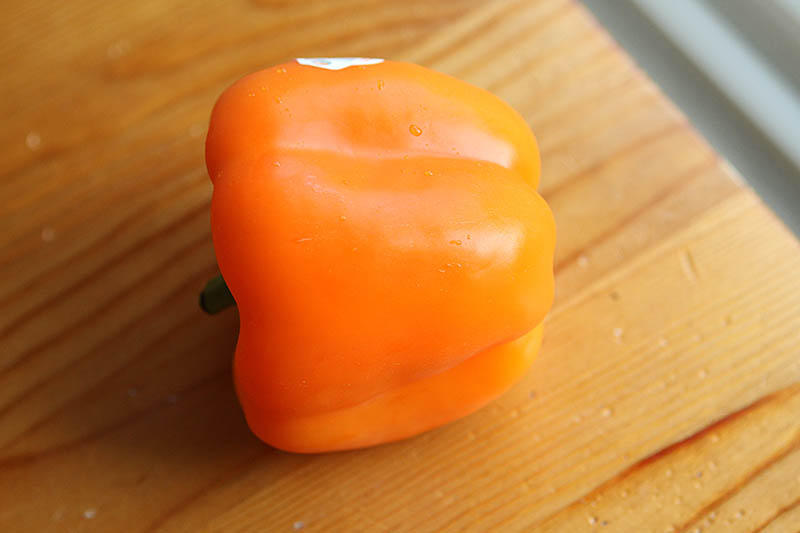
    4. Bell peppers stay in their plastic produce bag, but make sure it’s not wet in there!

    After a week sitting on a fridge shelf:

    If instead, you make use of the humble produce bag:

    5. Green onions that are starting to look a little peaky can easily be put in a glass of water by a kitchen window and start growing again. (Remove any dodgy bits first.)

    6. Limp celery? Droopy (but not brown) lettuce? Put it in cold water and watch the magic happen. They’ll re-hydrate and be right as rain.

    7. Perfectly ripe avocados will only last a few minutes on your counter (am I right?) but in the fridge they’ll stay perfect for a week or two.

    #2 Store your leftovers better

    Does this poem resonate at all?

    Deep in Our Refrigerator

    Deep in our refrigerator,

    there’s a special place

    for food that’s been around awhile…

    we keep it, just in case.

    ‘It’s probably too old to eat,’

    my mother likes to say.

    ‘But I don’t think it’s old enough

    for me to throw away.’

    by Jack Prelutsky

    Get Decent Storage Containers

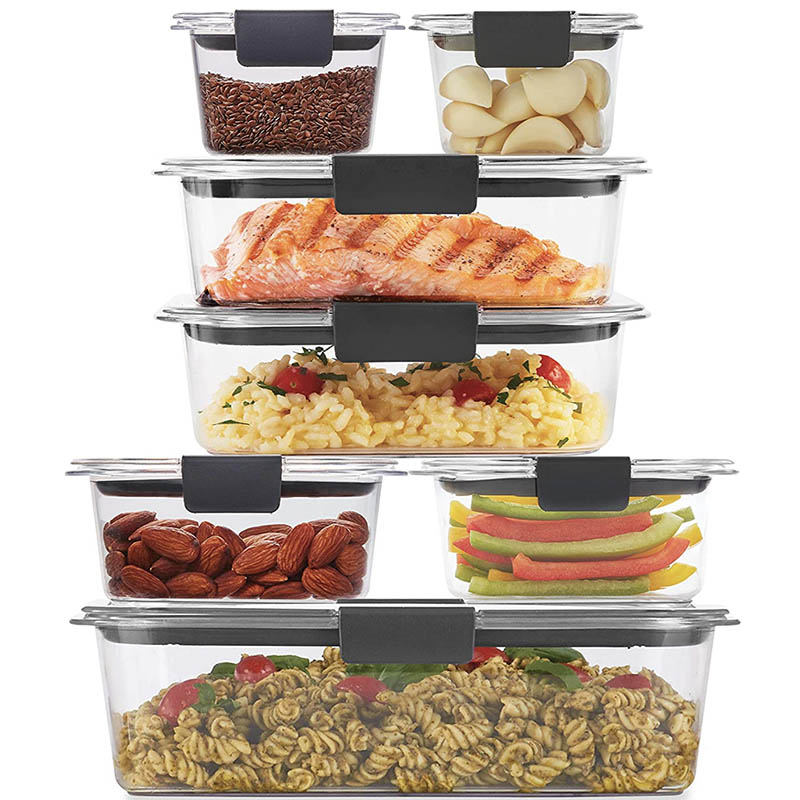
    I used to have a tupperware shelf that was full of mismatched, oddly shaped and often opaque containers. I invested $50 in nice, uniform, clear rectangular containers that nest, stack, and allow me to easily grab them and see what I’ve got stored in them. It has made such a difference! I don’t dread packing up leftovers anymore, my fridge is neater, the dinner I made two days ago looks appealing and obvious on the shelf, and everyone wins.

    The brand I bought is now pricier, but they’ve worked beautifully for us. This is a similar set by the same brand that gets rave reviews (affiliate link):

    They come in different sets and I specifically got one that includes lots of 9 cup containers in it, to better match our big family.

    Freeze Wisely

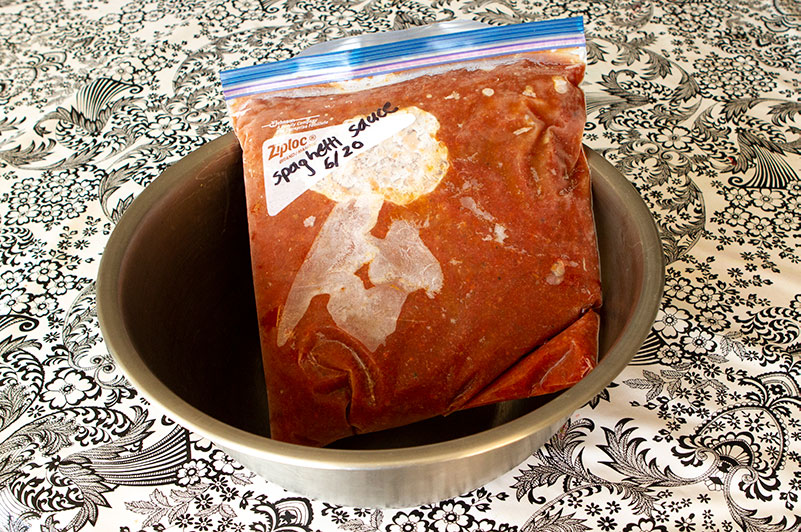
    Never put anything in the freezer you don’t want to eat. Seriously. If you fall into the trap of “optimistic freezing,” your freezer will become scary and you won’t want to open it. If you truly aren’t going to eat something, cut your losses and toss it. If you DO have fruit going a little soft (smoothies of the future!) or you aren’t eating the black beans fast enough (chili next week!), by all means freeze them and be sure to label them.

    If your freezer has only good, clearly labeled foods in it, you’re far more likely to open it and use food from it.

    #3 Organize your fridge & freezer

    We have a dedicated spot in our fridge for leftovers to use up. (Spoiler alert: It’s not in the back!)

    I glance there first when I’m planning a munchy lunchy or trying to decide whether I need to make a new dinner or we can eke out our leftovers.

    In my experience, most wasted food at our house is food that made its way to the back of the refrigerator and got forgotten about. Having a designated space keeps that from happening (as often).

    In the freezer, we have different areas for frozen veggies, frozen fruit, frozen breads, frozen nuts, and… you guessed it, frozen leftovers!

    We also have a spot for “produce to use up” in the fridge and “ingredients to use up” in the freezer. When something is nearing the end of its life, I’ll stick it there and pull it into the next flexible dish I make, usually a stir fry, vegetable soup, curry, or tofu scramble.

    #4 Make leftovers yummier

    Be smart about how you use your leftovers. Here are some quick ideas to get you started:

    • Fire up the oven or heat up a skillet. If you warm a burrito up in the microwave and then toast it in a skillet, it will taste miles better than just microwaving it alone. I love the microwave, but going the extra mile can make a big difference in the yum factor.
    • Add guacamole. Or homemade tortilla chips. Or cornbread. Or a side of fresh fruit. If a certain dish is becoming a little tired, shake things up.
    • If your brown rice is dry after being in the fridge, toss a couple of ice cubes on it when you warm it up in the microwave. It’s miraculous how quickly it’ll be moist and fluffy again.
    • Steel-cut oatmeal is better leftover when you add water or plant-based milk to it, because it tends to absorb liquid as it waits in the refrigerator.
    • When you make a big salad, don’t dress the whole thing. Dress half and serve it for dinner. Store the other half in the fridge separate so that you can dress it right before eating.

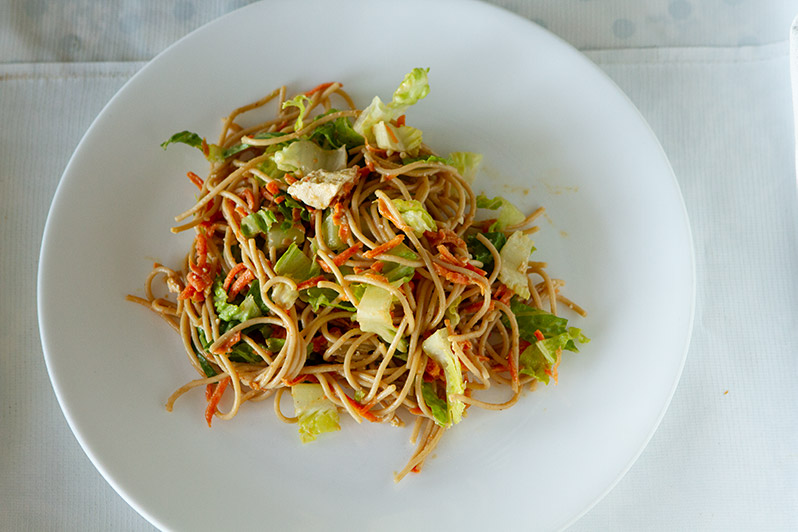
      For this salad, I chop up romaine and keep it separate in the fridge, then I toss the whole thing together fresh when we eat the leftovers:

    The exception is salads with a hardy green like kale. It can usually handle a few days of fridge time already dressed and massaged:

    The same principle applies to anything with avocado on it. Don’t add it to the whole thing. Add it to half, keep that avocado in the fridge, and cut it up for the next night.

    #5 Get Creative

    Challenge yourself to use up (almost) everything perishable before hitting the grocery store again.

    Maybe you’re out of bananas and leafy greens, and you’re itching to hit up the produce section, but you’ve got some potatoes, some broccoli and a few fresh tomatoes still at home. Curry!

    Use it all up, then hit the produce section. Or, you can plan a “catch all” meal for the day you go grocery shopping and round it out with what you buy. So you can go ahead and shop. Grab fresh cilantro to add to the top of your clean-the-refrigerator curry, and you’ll have a fresh slate when you unload those lovely groceries.

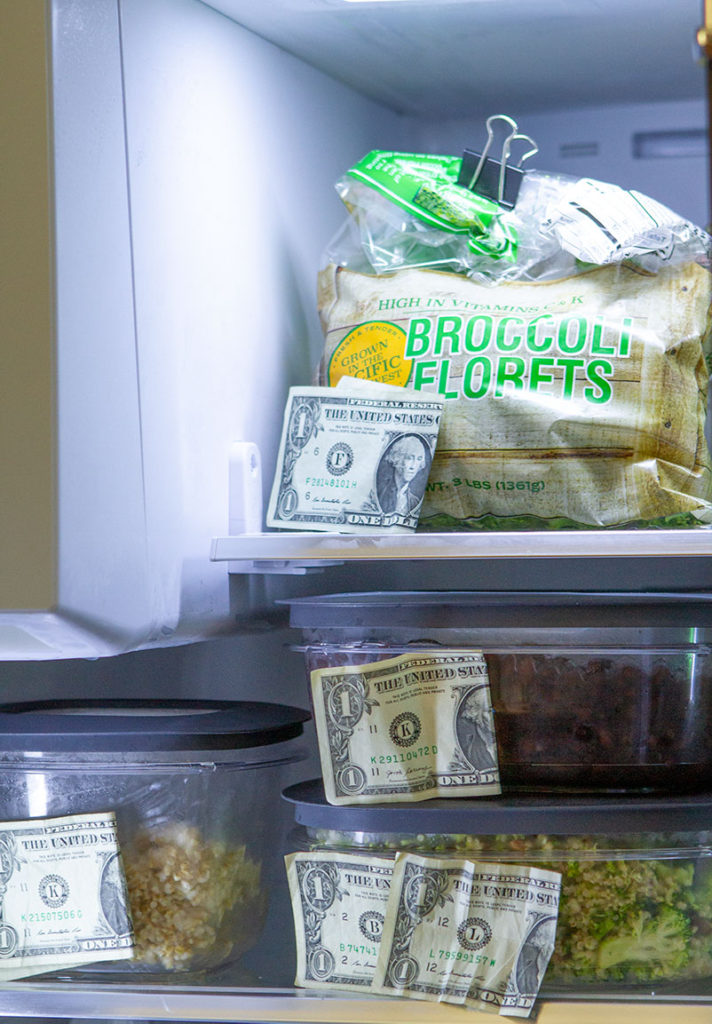
    Throwing away food is like throwing away dollars, yes, but think about it the other way round.

    You have lots of FREE food available in your fridge, freezer and pantry right now. Choosing to use up those odds and ends rather than letting them continue to age is like finding dollar bills everywhere and sticking them in your wallet.

  • Strategies for a Lean Grocery Budget

    One of the biggest hesitations people have when considering changing their diet to whole plant foods is, “Aren’t all those specialty foods expensive? I’m on a tight budget.”

    Nothing could be further from the truth!

    I think people envision themselves shopping at Whole Foods and adding ancient Himalayan superfoods to their cart that are priced like they are infused with the elixir of life itself.

    A whole food plant-based diet can be at least as affordable as a SAD (Standard American Diet). I’m willing to bet that meat and cheese are two of the highest priced items on your grocery lists. Those are going to be replaced with things like black beans, brown rice, and sweet potatoes.

    Plus, most Americans are actually paying much more for groceries than they need to. Most of these strategies will work on ANY diet.  Though if you’re a die-hard couponer and sales shopper, you may find yourself a little out of your element with a whole food plant-based diet.  After all, you’re trying to avoid the processed food that usually has coupons!  No worries, there are lots of tricks of the trade. 

    How important is recipe choice?

    Many people search for frugal recipes, but I would argue that frugal strategies are going to be far more helpful to your grocery budget.  You can take those strategies and apply them to any recipe, and you will have the confidence to decide if a recipe is frugal for your unique situation.  

    Rather than needing a “cheap recipe” to make, we need frugal habits of meal planning, shopping smart, storing food, and reducing food waste.

    How important is recipe choice?

    I know, I know, before you even see how much I spend, you’re already thinking that you live in an expensive area, or you have special allergy needs that make things more expensive! You don’t have time to meal plan or cook from scratch.  You don’t have a big pantry or room in your freezer.  

    All our circumstances are unique, but I will say with some creativity you can work around just about anything. 

    Here are some things to keep in mind:

    How low your grocery budget is does not reflect your success in life!  It seems silly to say so, but I think lots of us walk around feeling sort of sheepish about our grocery bill.  Maybe we recognize how impulse buys or lack of planning have increased it, or how we’re consistently throwing out fresh produce we bought with the best of intentions.  We’ve all been there! But if you’re looking to slim it down going forward, you’re in the right place.

    It may be that a higher budget reflects your values because you prefer to buy organic or support small businesses when you shop.  That’s cool too.  The lowest price tag may not be what you’re going for, but the right habits will save you money regardless.

    That being said, our family spends about $115/person per month on groceries.  That doesn’t include things like diapers or dish detergent. It’s just (mostly) conventionally-grown food.  It also doesn’t include going out to eat, which we do every few months.  It does include boatloads of fresh seasonal fruit, frozen berries, loads of whole grains, beans, lentils, leafy greens, sweet potatoes, nuts, plant-based milk, and more. 

    In medical school and residency, we kept it lower, but we’ve loosened up a it and more frequently indulge in “extras” now. 

    Putting a grocery budget in perspective

    Anyone who is in poor health can tell you that good health is priceless.  A hundred million Americans pay for prescription medication to treat the symptoms of a poor diet. Type II Diabetes is reversible with a plant-based diet and costs tens of thousands of dollars of care over a lifetime, yet we still tend to balk at the price of the produce at the grocery store that would reverse it.  Why is that?

    I think the bell peppers and kale feel optional, whereas a medical bill feels mandatory.  Yet, it’s often the opposite way around! So many medical bills become non-existent when we eat more vegetables. 

    Meal Planning is Key

    I wish it wasn’t so, but thinking ahead about what you’re going to eat solves so many expensive problems:  Last minute take-out, spoiled food that you bought without a plan, leftovers that went bad because you winged it again, individual servings bought when you could save buying in bulk, extra last-minute trips to the grocery store with their accompanying impulse buys, the list goes on. 

    The good news is that meal planning can be much less painful when done just once a month, and I have a whole walk through on once-a-month plant-based meal planning here. 

    Do you already meal plan but have a hard time executing the plan? Read my post on Meal Planning lynchpins here for help.

    Shop at the Right Store(s)

    It turns out that even keeping your grocery list the same, you might pay wildly different amounts of money depending on where you shop.  Of course we joke about Whole Foods being called Whole Paycheck, but even the other grocery store chains vary widely in their prices.  And since you’re eating a plant-based diet the things you buy the most may not match up with their weekly circulars.   I highly recommend creating a Price Book to help you choose which stores to patronize regularly.  It takes some extra time on your first few shopping trips, but in our case, this one simple activity has saved us a thousand dollars a year ever since! 

    Here’s a complete primer on creating a Price Book, and a guide on buying bulk food.

    We try to minimize our shopping trips because we love the time and money savings when we do.  So, we shop every 7-10 days.  After creating our Price Book, we determined where we want to do our big monthly shops (Winco and Costco, in our case), and where we like doing our mid-month produce runs (Winco, the farmer’s market, or Safeway).

    This means we stock up on our applesauce, whole grain pasta, dried beans, and more at Winco, but when we just need fresh veggies and fruit and don’t want to drive across town, we can just stop in at nearby Safeway and pick up some basic produce plus whatever produce is on their weekly special. 

    Identify Your High-Ticket Items

    Zero in on the things that make the biggest impact on your budget, either because you buy so much of them or because they are individually more costly.  Here are some of ours and how I address them:

    Nuts and Seeds

    Because I’ve made a Price Book, I know that nuts and seeds are spendy. We enjoy them, though!  

    – We rarely just snack on them.  If I left them out on the counter for free grabbing, we’d have to significantly increase our grocery budget! 

    – We recognize that pinenuts are twice as expensive as pecans, which are twice as expensive as walnuts, which are three times as expensive as sunflower seeds.  That means that if a salad calls for pecans on top, I’ll frequently toss some walnuts or sunflower seeds on instead.  We’ll save pecans for dishes where they really sing.

    – We buy pecans, almonds, and walnuts at Costco because they’re a better price.  We buy pinenuts there because they are fresher.  We store any nuts we won’t eat in a month or so in the freezer so they stay fresh.

    – We buy “pieces” when it comes to cashews, because we don’t really need whole cashews and pieces are cheaper.

    – I recognize that any dish that calls for a large amount of nuts, such as in a creamy sauce, will be a pricier (and richer) dish so I make it less frequently. 

    Spices

    We love flavorful food! Spices can really add up if you cook from scratch a lot and buy the little jars at the store.  Here’s what we do instead:

    – We buy spices at ethnic stores. Mexican and Indian markets in particular tend to have big bags of spices for much less money. 

    – We buy spices in bulk at Penzeys.  Their stores are great but they also regularly offer shipping deals so you can catch them online without paying extra.  Years ago I bought these tins in 4oz and 8oz sizes and we just fill those up from Penzey’s bulk bags.  The quality of the spices is fantastic, my cupboard stays neat and I don’t have to keep paying for bottles every time. 

    – You can keep spices in your freezer to extend their life, but we don’t do this and just buy enough to last a year or two at a time and it works out great.

    Berries

    We love berries! They are nature’s reward for eating plant-based.  But they can really be pricey!  Here are some ways we enjoy them year-round:

    – We pick our own in the summertime.  There are lots of blackberries growing wild where we live, and we eat our fill for more than a month, then frequently put several bags in the freezer.  We go to U-pick farms for blueberries and strawberries.

    – We buy a big bucket of strawberries and one of raspberries every year through our local Rotary Club sale.  When it arrives, we bag most of it up into quart size portions and freeze.  We’ll defrost these throughout the year to eat on pancakes or waffles.

    – We buy frozen berries and cherries at Costco (because it’s the best price!) and have one morning a week where we eat steel-cut oats and berries or cherries.  Besides the frozen ones we eat on waffles or pancakes, we don’t eat fresh berries in the winter time.  They are much more expensive and much less delicious. 

    Other fresh or frozen fruit

    We buy fresh fruit as follows:  Always bananas, and always lots of apples, pears, and/or oranges as long as they are sitting around $1/pound, grapes if they’re $1.50/lb.

    The kids can have 1 piece of fruit every day as a snack year-round.

    We eat lots and lots of fresh fruit in season (pomegranates in the fall, watermelon, cantaloupe, and peaches in the summer, apples and pears in the fall and winter), but fall back on our standard fruit otherwise. We also have frozen fruit for smoothies (Costco!), canned pineapple and jarred unsweetened applesauce. 

    Dried fruit

    Here again, the source really matters.  We buy most of our dried fruit from the bulk bins at Winco.  We order a whole case of raisins or date crumbles and save an extra 5% that way, plus the hassle of scooping out sticky stuff into bags so often.

    We don’t often snack on dried fruit, saving it just for eating for breakfast in oatmeal and muesli. 

    We buy date crumbles instead of whole dates for this, because they’re half the price.  We save the soft, whole dates for when they’re really awesomely deliciously needed, like in these cupcakes and their frosting:

    Plant-based milk

    Cheese and Meat Substitutes, prepared vegan food


    Identify your highest ticket items (for us, it’s nuts and seeds and spices), berries and other fresh/frozen/dried fruit.

    Don’t Waste Food – plan your meals so you aren’t buying stuff you don’t have a plan for eating, store things appropriately, use your freezer, set yourself up for success so you don’t bail on making a meal and order take-out instead, get creative with the odds and ends

    Minimize trips to the store because every time you walk in the door it’s costing you extra money.  Just the gas to get there, or the impulse buys are enough to drive up your grocery bill.  (meal planning, substitutions, pantry/shelf cooking, have meals in the freezer, keep a well-stocked pantry)

    Know your lower-cost substitutions.  Walnuts for pecans

    Make it yourself (when it makes sense) – You can have a make it yourself or do without rule.  But investing in an instapot, for example, saves us hundreds every year.  It is truly so easy to make your own beans.

    Become a pro at reading price tags. (shredded broccoli slaw in a bag was cheaper per pound than the heads of broccoli were… broccoli was really in 5 different places at the store).  Oats in the health aisle vs the breakfast aisle.

    Find a place to buy in bulk.   Walnut example. The baking aisle at the store.

    https://www.amazon.com/Walnuts-Halves-Pieces-Raw-lbs/dp/B001SAXKYO

    https://www.amazon.com/Sincerely-Nuts-Large-Medjool-Dates/dp/B00HQN1POE

    Buy online and split with friends. We’ve done this with vanilla, spices, and more.  These seeds are $8/lb if you by one pound, but you can get 5 pounds for $15: https://www.amazon.com/Sincerely-Nuts-Sunflower-Delicious-Antioxidant/dp/B00I9DABVI

    Be a little flexible (kale vs. chard comparison) .  Sweet potatoes vs. winter squash.

    Coupons won’t help you as much when you stick to the produce section most of the time,  but you can be flexible when it comes to seasonal sales on produce.  Shift your diet so that your everyday munching fruits and vegetables follow seasons. 

    Organic or not?  There’s also buying in season, buying local, gardening…. organic snack food is not really healthier. If you want to do that for ethical reasons, by all means, but don’t let that excuse keep you from embracing a healthier diet.  There are lots of ways to help the environment (use reusable grocery bags, buy in bulk and cook your own, take fewer trips to the grocery store, etc.) but one of the very BIGGEST is stop eating animals and their products because it’s ruining our planet to have those farms.

  • Why You Should Serve Oatmeal for Breakfast if at All Possible

    Why You Should Serve Oatmeal for Breakfast if at All Possible

    I’m serious about this. Oatmeal is such a beautiful intersection of cheap, easy, healthy and delicious. If you’re shooting for a whole food plant-based diet, or just improved health, start with oatmeal for breakfast most mornings.

    If you think oats are gloopy or boring, please keep reading. I’ll solve both of those problems for you.

    If your kids don’t like oats? Trade them in for kids that do. Or, just keep trying with the kids you’ve got. They’ll come around eventually.

    You’re going to save so much money over any kind of prepared breakfast food (bars, boxes of cereal, etc.), you’ll ditch the added sugar, and oats will keep you all full longer. There are even great hot weather options!

    Getting the Oats Cooked Right

    The first thing you need to know is that an intact oat is called an oat groat. Ok, you didn’t need to know that, but it’s helpful. An oat groat looks like a grain of wheat.

    Steel-cut oats are simply oat groats that have been sliced up into a few pieces. Rolled oats, however, are oat groats that have been steamed and then rolled. Instant or quick oats are hardly worth mentioning here, but they’ve basically been pre-cooked, then dried, then rolled, and are processed beyond recognition. If you are judging oat potential by the little packets at hotel breakfasts, you are missing out.

    Note: Some toppings you’ll want to cook in the oats, and you’ll add those when you add the oats. Some you add after. Be sure to scroll down for all the topping tips.

    Option 1: Rolled Oats

    Rolled oats are quick and easy to make in the microwave in a single portion, and they don’t dirty extra dishes… but my husband finds the texture off-putting. I make these for my kids often, and it’s easy to make my husband a bowl of matching muesli (see Option 3) at the same time.

    Here’s the rolled oats microwave version:

    • 1 cup of rolled oats
    • 1 1/2 cups of water

    Microwave for 1.5-2.5 minutes (just keep an eye on it so it does not boil over. Once you know the right time for YOUR microwave, you won’t have to watch it.). You can also cook it at 3/4 power to prevent an eruption.

    You may find that you prefer 1 3/4 c. water, instead. It will thicken as it cools!

    You can also make rolled oats on the stovetop:

    • 2 cups of rolled oats
    • 4 cups of water

    Bring the water to a boil, add the oats and lower the temperature. Stir and simmer for about 5 minutes.

    One cup uncooked oats is a standard portion size around here. That is the caloric equivalent of 3 of those lame little instant oat packets, but far less mushy.

    Option 2: Steel-cut Oats

    First, I need to advise you not to buy the steel-cut oats in the little metal cans at the store. They are heinously overpriced. If you plan to eat steel-cut oats on a regular basis, you need to find a reasonably-priced source. I pay less than a dollar a pound.

    The texture is far superior to rolled oats, and the flavor is nuttier and tasty. They’re a win all around, except they seem more intimidating to prepare, until you know the secret!

    The easiest way to cook steel-cut oats, the night before:

    The night before, simply boil your oats on the stove for one minute. Give them a stir, turn off the heat, put the lid on. That’s it! In the morning your oats will be ready to warm up and eat.

    Ratio:

    • 3.5 cups of water
    • 1 cup of steel-cut oats

    For one meal, I’m making about .5 cups of steel-cut oats per person.

    The easiest way to cook steel-cut oats, the morning of:

    I don’t like standing at the stove stirring things. Usually my kids keep me hopping while I’m pulling breakfast together, so having to babysit something on the stove leads to spillover, burnage, or both.

    Here’s the hands-off way to perfect steel-cut oats in the morning:

    1. Boil the water.
    2. Add the oats and turn down the heat until they’re barely simmering.
    3. Simmer unsupervised for 10 minutes.
    4. Turn off the stove, stir once, and put a lid on them. Come back in 20 minutes.
    5. Stir and enjoy!

    Again, here your ratio is:

    • 3.5 cups of water
    • 1 cup of steel-cut oats

    For one meal, I’m making about .5 cups of steel-cut oats per person.

    Option 3: Muesli

    In Switzerland and Germany this is very common for breakfast, but for some reason few Americans have figured out this excellent oatmeal alternative.

    Basically, at our house muesli is rolled oats (or a rolled multigrain blend), plus dried or fresh fruit, plus plant-milk or juice.

    That’s it! You can (optionally) soak your fruit in the liquid overnight and then add the grains in the morning, but we usually just throw this together the morning of.

    Option 4: Overnight Oats

    This is basically muesli, but made ahead so everything is ready to go when you wake up in the morning. You can eat it cold or warm, and I’ll bet you’ve seen it made in cute individual mason jars on many blogs.

    I made it once in cute little mason jars and then realized that cleaning out a half dozen individual mason jars was not worth the cute factor for me! You do you, though, and you could probably make up a batch and then scoop it into bowls the morning of pretty easily. Googling “Overnight Oats” will give lots of topping ideas, and I thought it worth including as an option.

    Did I say cheap?

    Saving money on your grocery budget is a high priority for many people, right up there with enjoying better health.

    We buy both rolled oats and steel-cut oats from our local Winco Foods for $.75/lb. We can make 5 BIG, belly-filling servings of oats from one pound of dry oats. That’s 15 cents a serving, leaving plenty of wiggle room for spices and fresh fruit to put on top.

    If you don’t have a good source locally, look online. If you were to order a 25 lb bag of steel-cut oats from Bob’s Red Mill online, you would be getting 125 servings of breakfast for $28!

    Always different, always delicious

    Just because you have oatmeal most mornings of the week does not mean it needs to be boring. In the colder months, we have cooked oatmeal 3x/week and muesli 2x/week, and we tend to flip that ratio around to favor muesli when the weather is warmer. It’s easy to change up the toppings so breakfast is yummy all year.

    Here are 11 favorites to get you started:

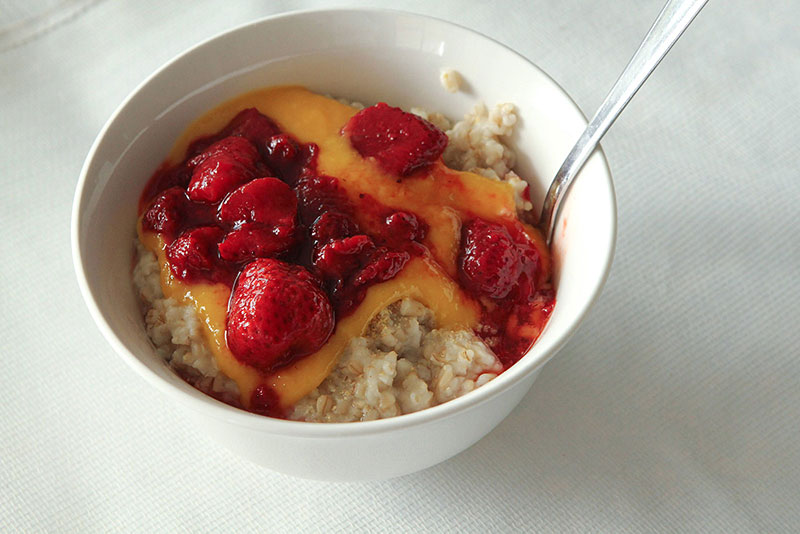
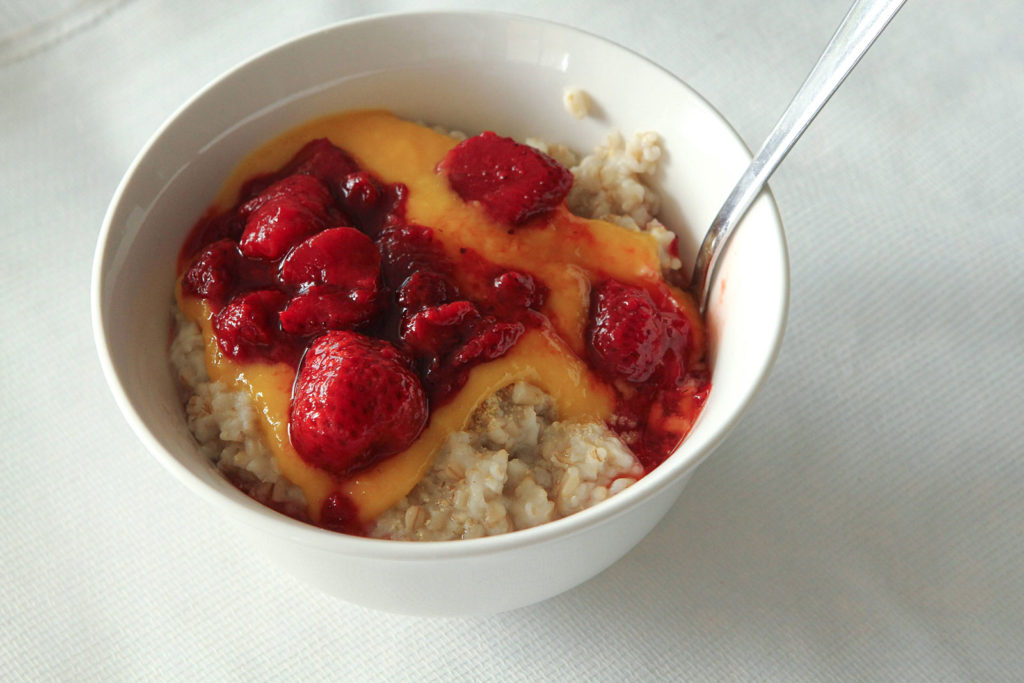
    1. Every Monday, we have steel-cut oats with (usually frozen) berries or cherries. I like to streamline our menu plan and it’s nice to not make a decision for Monday mornings.

      Pro tip: I scoop a cup of berries or cherries in each bowl when I put the pan of water on to boil. By the time the oats are done the berries are partially thawed, so stirring a cup of piping oatmeal into each bowl makes it a perfect temperature for digging right in.

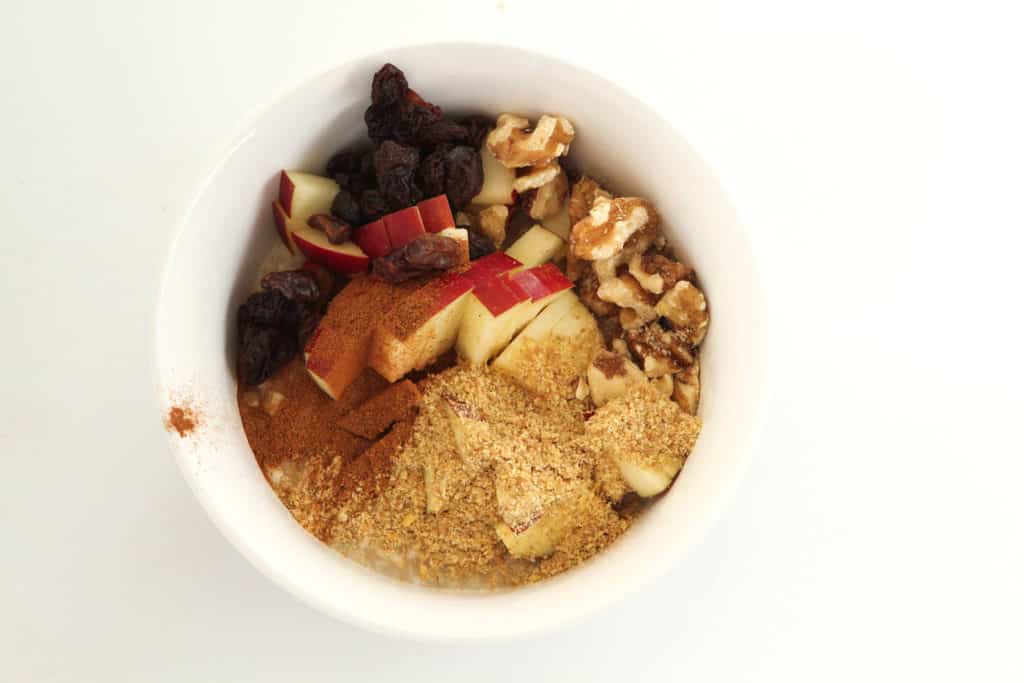
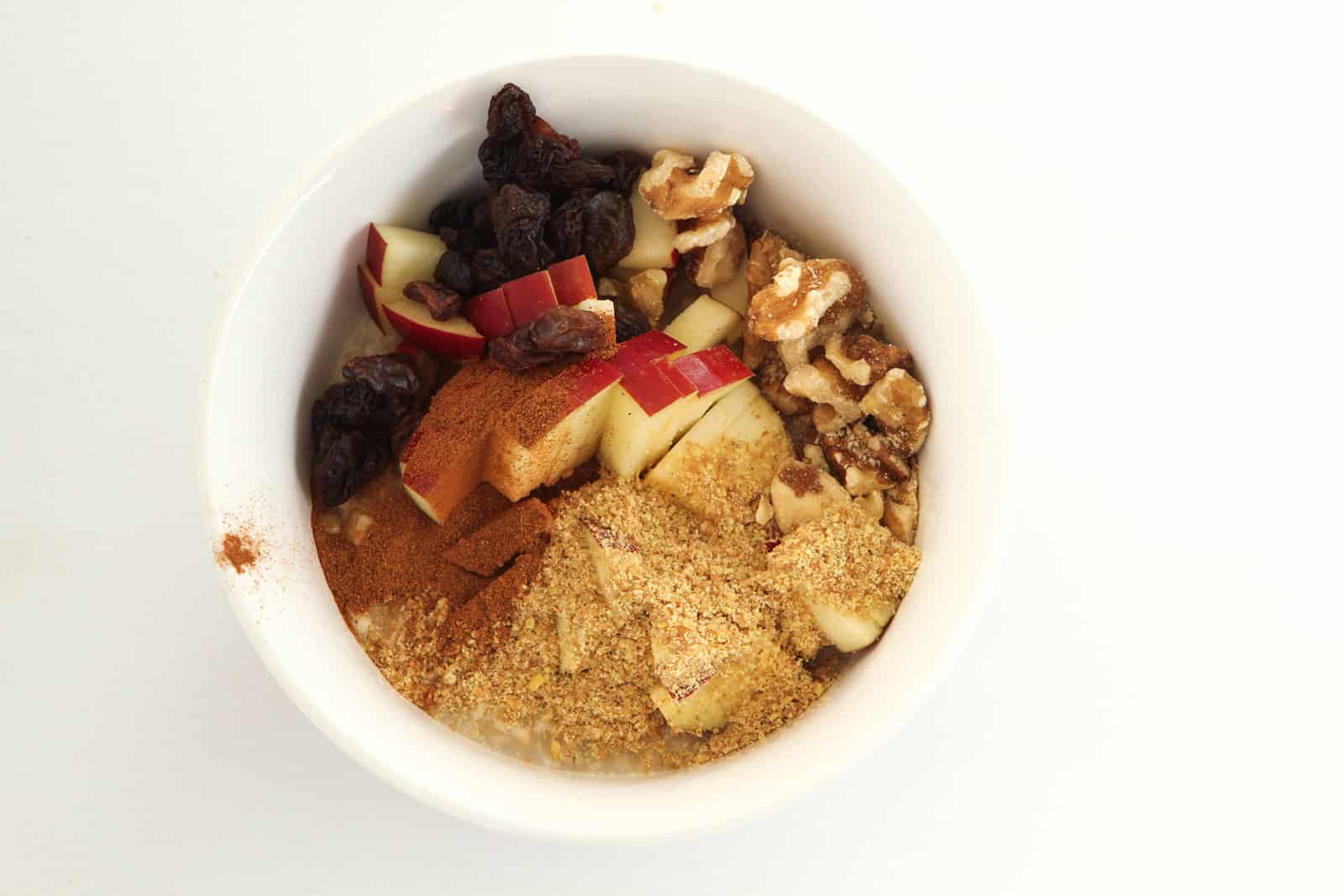
    2. Once a week, we add apples, raisins, cinnamon, vanilla, and walnuts to either oats or muesli.

      Pro Tip: I like to cook the raisins with the oats so they’re soft, but add the apples in afterwards. Try it both ways!

      I also sometimes have this combination in a muesli made with apple cider instead of plant-based milk. Mmmm.

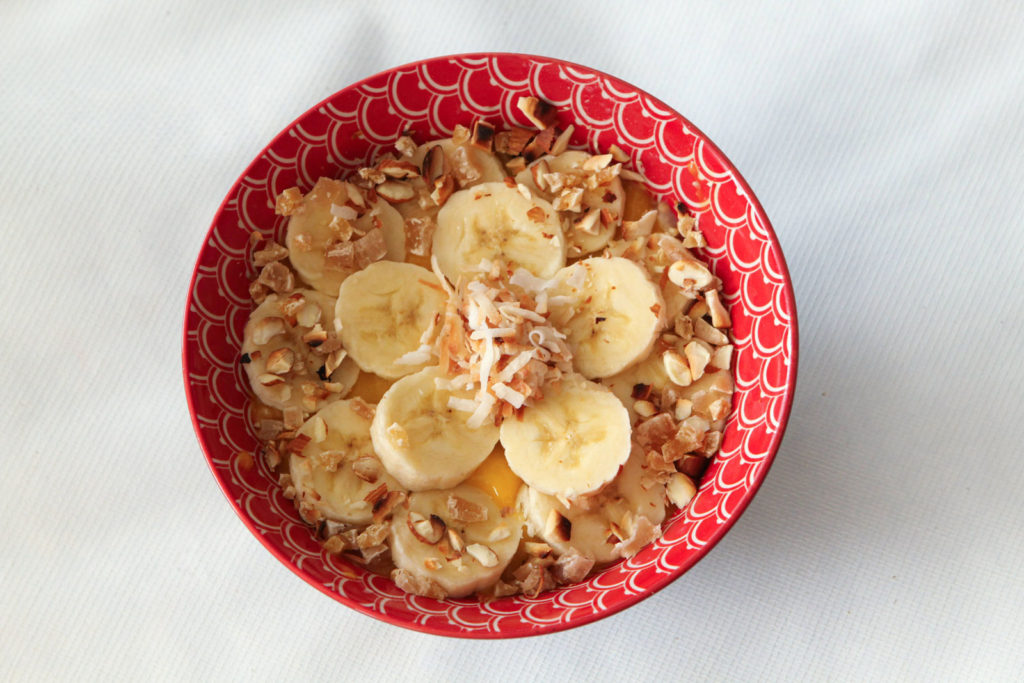
    3. Most of us (my husband excepted) love banana, cinnamon, nutmeg, and walnuts in our oats. I mash up the banana with a fork and stir it in after the oats are cooked.

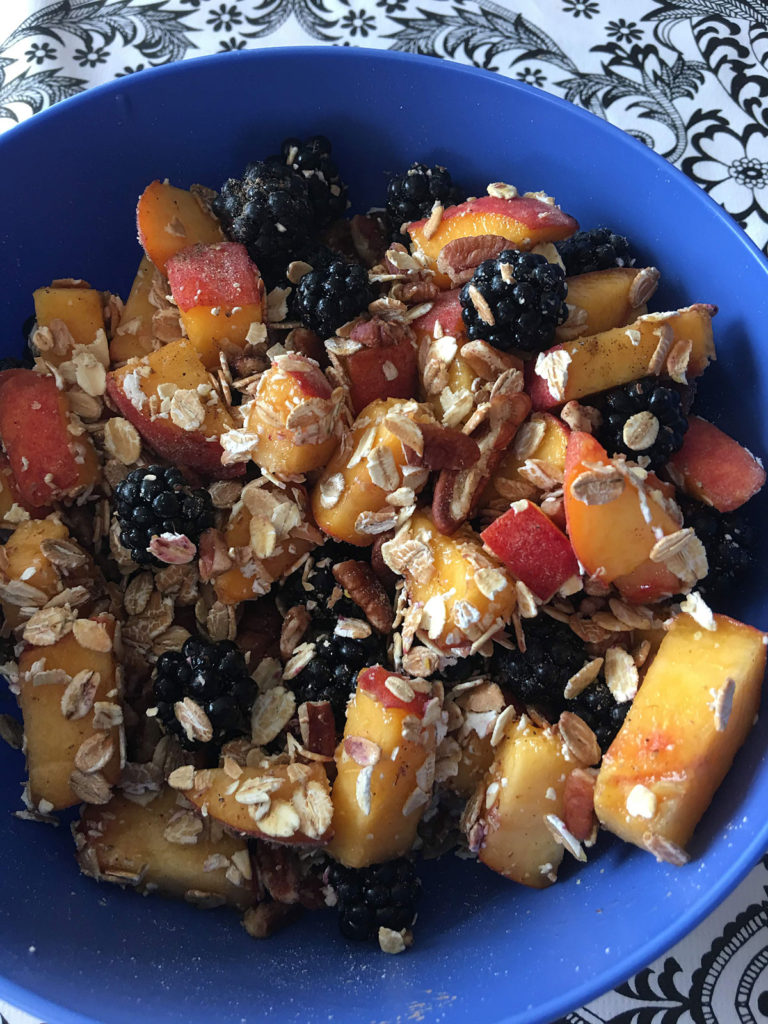
    4. In the summer, peaches, cardamom and pecan with fresh blackberries is as close to heaven in a bowl as I can imagine.

    5. Pear and crystallized ginger, again with the sliced almonds.

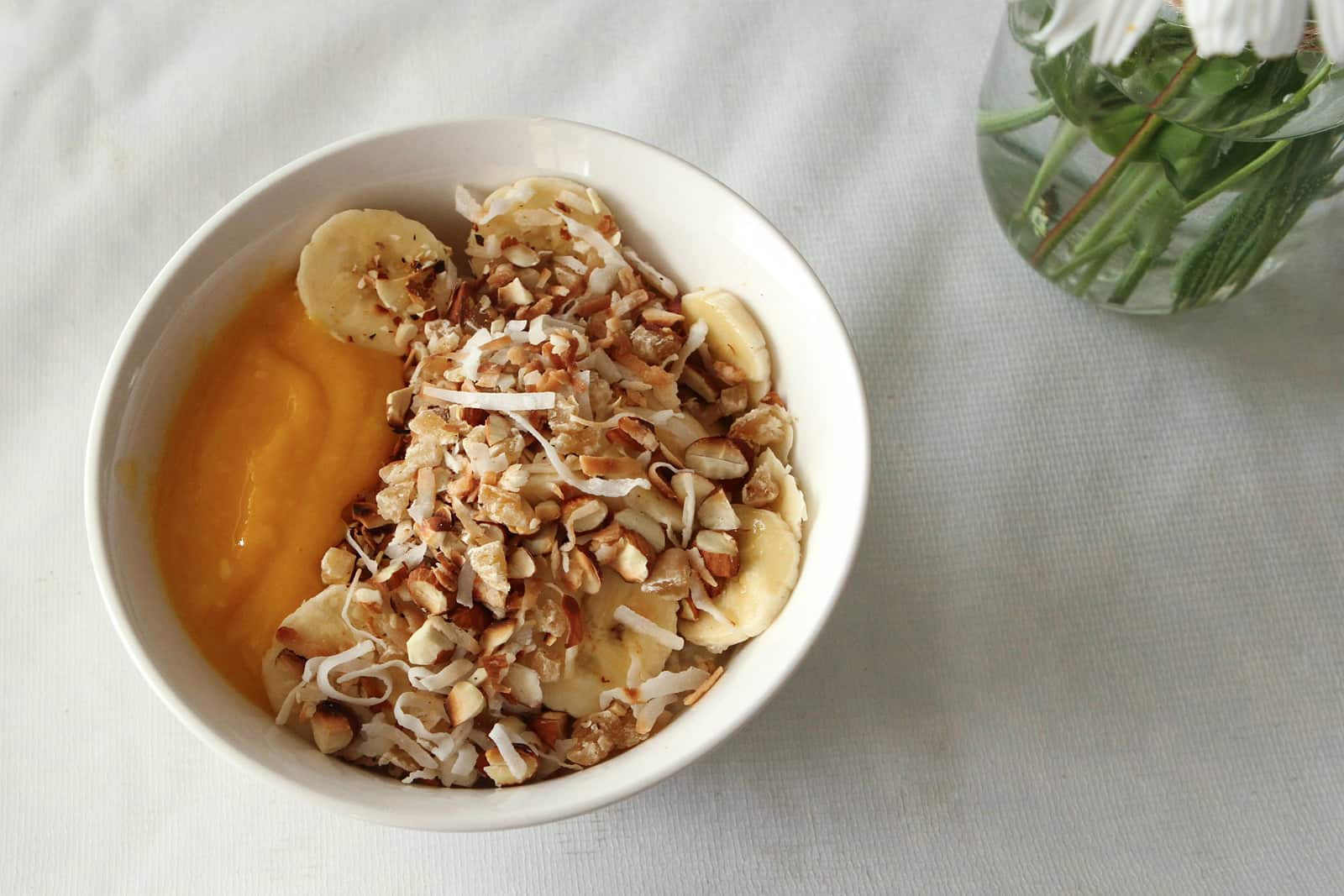
    6. Date crumbles, unsweetened coconut, sunflower seeds, and cinnamon

    7. Fresh fruit muesli with grapes, apples, oranges, and (optionally) bananas

    8. Chopped dried apricot with pumpkin seeds (AKA pepitas)

    9. Applesauce and cinnamon. One time I invented “applesauce muesli” out of desperation and it’s become a steady favorite. I just stir unsweetened applesauce into rolled oats, add some cinnamon and flax and voila. Happy kids.

    10. Blueberries, lemon zest and sliced almonds

    11. Pumpkin, sweet potato, or winter squash – If I have some in my fridge already cooked, I’ll add it along with cinnamon and some date crumbles.

    Oatmeal. Make it your next breakfast!

    And, if you have kids and they’re starving and the oatmeal is still too hot to eat, serve it spread out on a plate.

    It’s less attractive but still every bit as yummy, cheap, easy and healthy.

    Just keepin’ it real.