Winging it for dinner is just not sustainable for me. Some meal planning is essential because I have five children (ages 1-12) and a hungry husband, and I don’t like the “What am I going to make for dinner?” question hanging over my head all day. We try to eat 90% whole plant foods, which means just picking up fast food or ordering a pizza isn’t a good backup “plan.”

For years I struggled to find something that stuck. Mostly, I’d put off meal-planning because it was an unpleasant chore and the plans I make didn’t seem to be flexible enough to hold up to real life. I’d end up winging it anyway because in the pre-dinner hour I couldn’t pull together a new or complicated recipe in time. Produce would go bad waiting to be made into meals, and I’d start avoiding meal planning again.
I couldn’t use a pre-made plan online, as great as they sounded, because they didn’t fit the preferences of my family or my timeline in the kitchen. It would mean too many new meals at once, too many new ingredients, and it felt overwhelming instead of helpful.
Then I stumbled upon a once-a-month meal planning video from a mother of 9(!), and it was perfect. I adopted it to our plant-based lifestyle and haven’t looked back since. It’s easy to implement, flexible, and it’s dramatically reduced our food waste. I’ll spell out how I do it for you here. May it help you in your efforts to slay the What’s for Dinner Dragon!
Personalize this guide
I’m willing to bet your situation is not just like mine.
Maybe you actually love to cook, or you don’t mind eating the same breakfast every single day, or you DO enjoy going to the grocery store. Maybe you don’t have kids at home so you’re cooking for just one or two people instead of half a dozen.
Your main goal might be to:
Spend less money on vegan groceries
Make meal planning easier
Spend less time in the kitchen
Finally get around to trying some of those bookmarked recipes
Plan yummy meals so you’re eating intentionally instead of snacking mindlessly
Incorporate leafy greens and beans more regularly.
Whatever you’re here for, you can use the principles below if you apply them to your situation. For example, before we had children, I only cooked 3 dinners a week, and I rarely decided what I would eat for breakfast ahead of time. And when we first changed our diet, we made the same meals from week to week because we didn’t have many we liked yet!
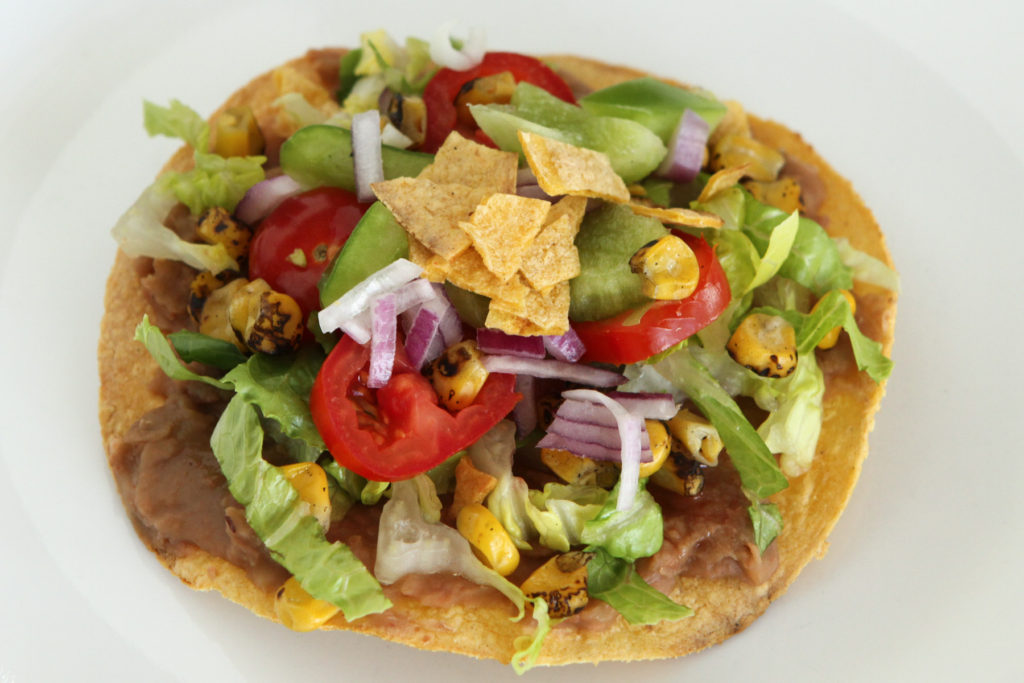
But this approach to meal planning is flexible enough to work for this kind of dinner:
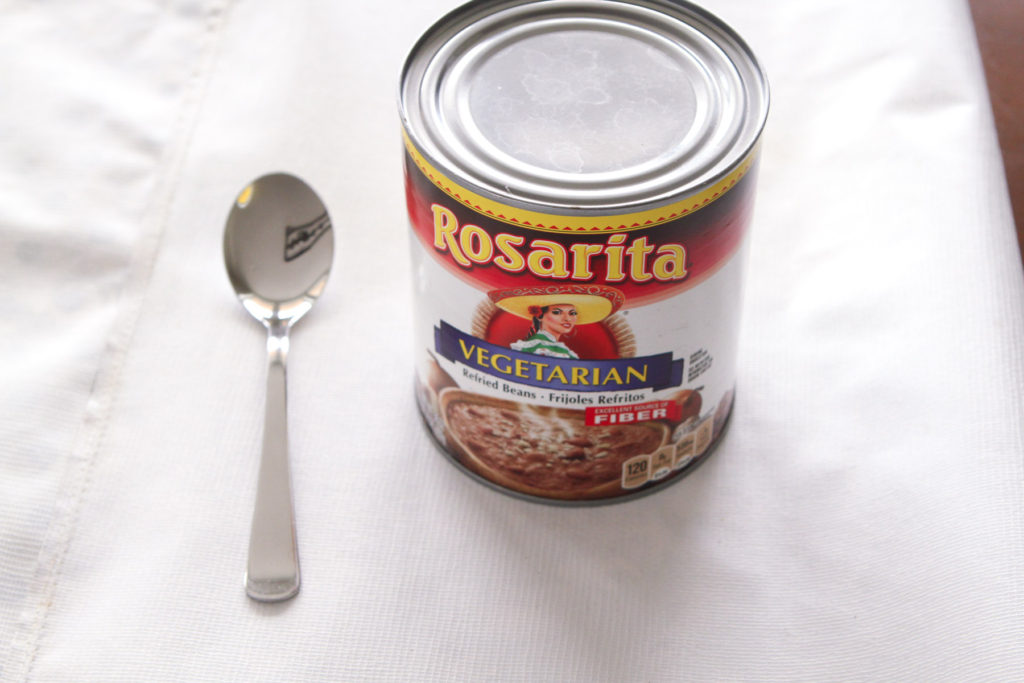
as well as this kind of dinner:
Get more from your time
I love planning meals only once a month because I spend less time in planning and list-making, and it also significantly cuts down on the amount of time we spend going to the grocery store.
Our favorite grocery store is a 15-20 minute drive away. Shopping there saves us hundreds every month on groceries, so it’s worth the trip, but I don’t want to make the trip any more frequently than I need to! Plus, shopping with kids can be a little… chaotic. Fun, yes, often. But chaotic for sure.
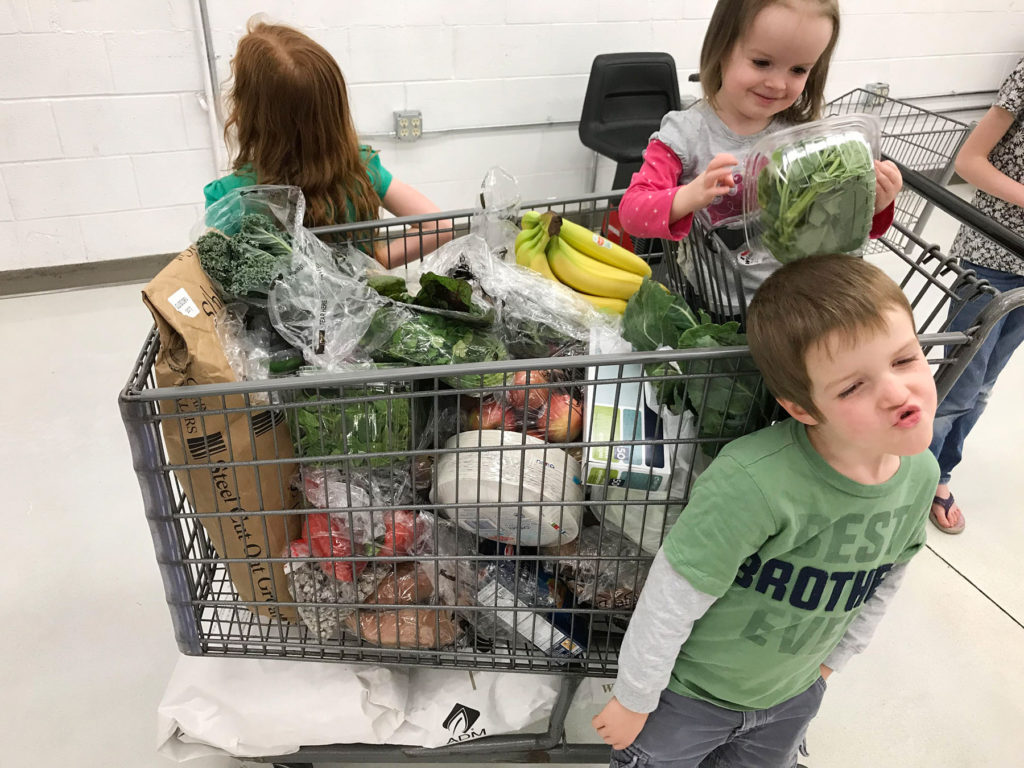
We do a big shop at the beginning of the month and stock up on any pantry essentials as well as fresh produce for the first 10-14 days. Then we shop just for fresh produce an 1-3 times during the month.
I make sure to store my produce properly and make my meals with more perishable ingredients first, which helps me stretch out my time between trips to the store, even while we eat lots of fruits and vegetables.
Key #1: Plan three meals each day and snacks
I used to think planning for all meals and snacks was too much work and too rigid for me, but I’ve found it’s the opposite! It’s brought a lot of peace of mind and more variety to our table with less effort overall.
Because we eat 90% whole food plant-based and not much of what we buy is prepared, if I want to have food available for my crew I need to plan for it. Easy meals are made even easier when the stress of coming up with them on the fly disappears.
Key #2: Repeat your breakfasts, lunches, and snacks
At the beginning of every month, I write up 7 breakfasts, 7 lunches, and snack options. We will repeat those same meals and snacks throughout that month.
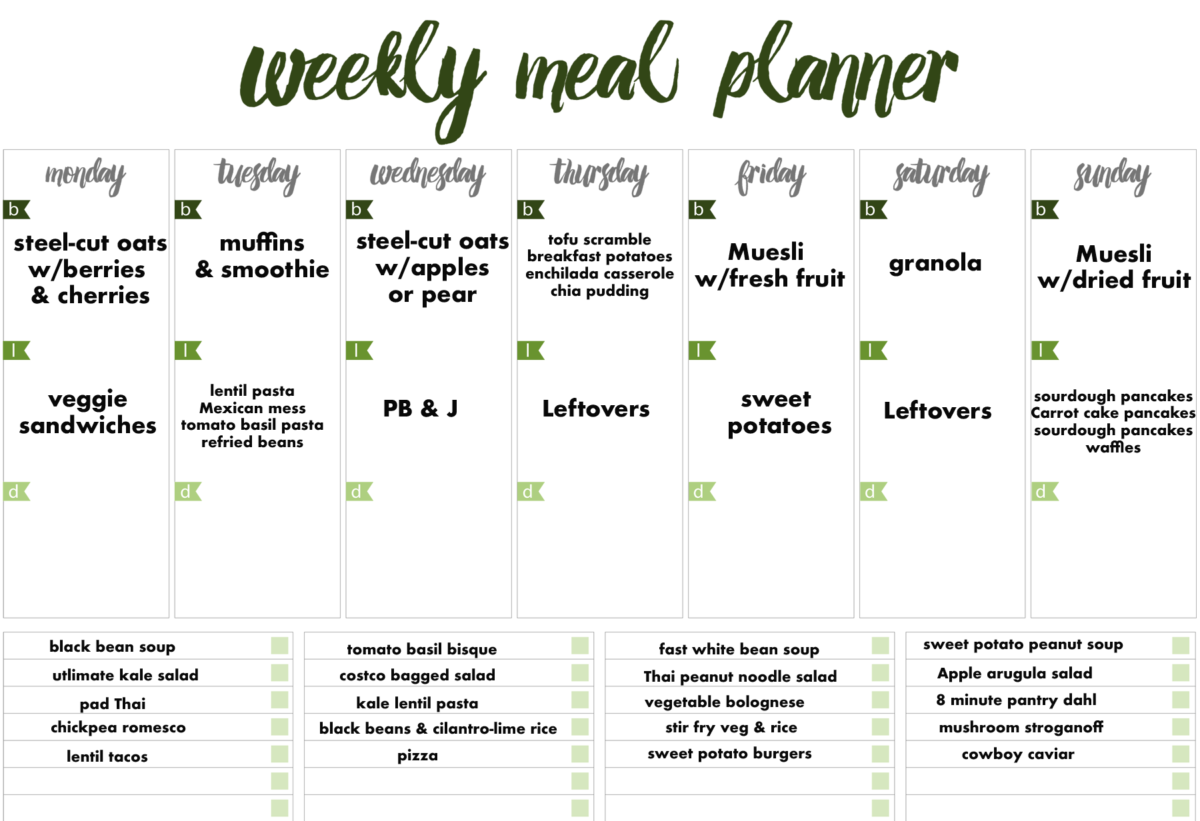
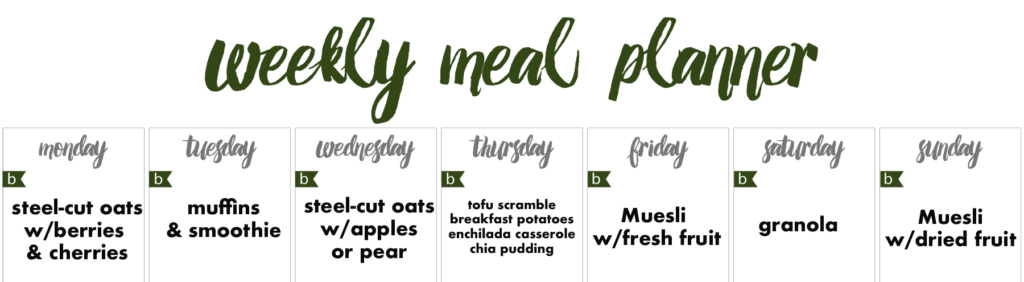
I assign the meals to days that make sense with our schedule. This month it looks like this:
Breakfast
Monday: Steel cut oats with frozen berries or cherries
Tuesday: Muffin & smoothie
Wednesday: Steel cut oats with apples and cinnamon or pear and ginger
Thursday: Something different (tofu scramble, breakfast potatoes, chia pudding, and black bean enchilada cassserole)
Friday: Muesli with fresh fruit
Saturday: Homemade granola
Sunday: Muesli with dried fruit
Of course yours will look different! There are lots of vegan breakfast options available online, and you’ll have to experiment a bit to find that intersection of easy and tasty. (Here’s why I think you should serve oatmeal if at all possible.)
The idea of making the same thing predictably every Monday is a game-changer. There’s enough day-to-day variety to not get bored, and enough week-to-week consistency to make things run more smoothly. Plus, I only have to plan one week instead of four!
Here’s what the top of my planning sheet might look like:
(Far more talented people than I have created free printable meal planning sheets. Just google it and pick your favorite. )
Making it even simpler
We’ve had seasons where we eat oatmeal or muesli EVERY DAY to keep things simpler, with toast and fruit as an option if we need to mix things up.
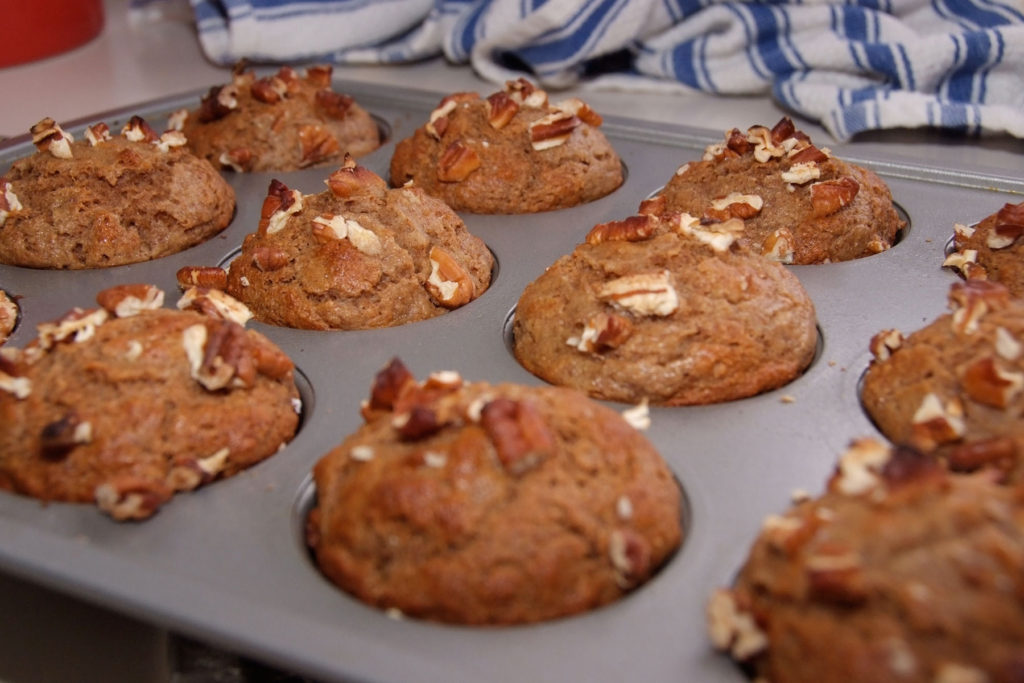
In fact, I’d probably always do that if it was just me, but my husband loves food and variety, so I add in some different things for different days when I can. I make a month of muffins at a time and freeze them, and a month of homemade granola. For right now, the above menu works for us, but be realistic about the season you’re in and pick meals that work for your family.
You can just carry those same meals on from month to month, and only tweak for changing seasons or the addition of a new recipe occasionally.
Lunches
Leftovers are a go-to easy lunch option, and I try to send leftovers with my husband to work whenever possible. The rest of us used to almost exclusively eat leftovers for lunch as well. However, we’re a larger family now and it’s trickier now to cook enough extra food, and I’d rather freeze extra for an easy dinner in the future. So, we stick to low-key lunches and schedule them much the same way we schedule breakfast, repeating week to week.
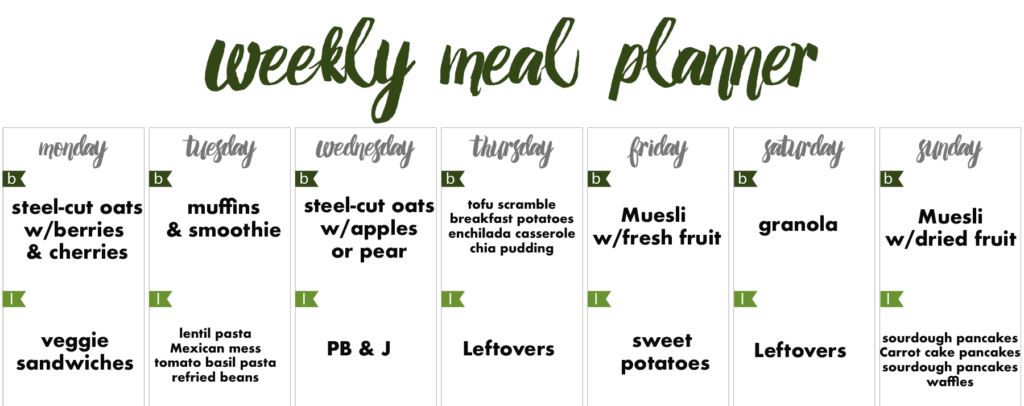
Of course yours will be different, but here’s this month’s lunch menu at my house:
Monday: Veggie sandwiches
Tuesday: Easy bean dishes two weeks, easy pasta dishes two weeks – (Mexican mess, homemade refried beans, pasta with lentils & jarred marinara sauce, creamy tomato basil pasta)
Wednesday: Nut butter sandwiches, served with fruit and vegetables
Thursday: Leftovers from Tuesday.
Friday: Baked sweet potatoes
Saturday: Leftovers from weekday dinners
Sunday: pancakes or waffles (whole wheat sourdough pancakes twice, carrot pancakes, waffles) – Family tradition!
Once again, I’m repeating lunch dishes all month, and I repeat them in future months with only a few tweaks here and there.
Now my meal planning sheet looks like:

Side Note: If you don’t already eat an entire baked sweet potato and call it a meal, it may be time to start.
If I have “leftovers” on the calendar, and we don’t have enough leftovers in the fridge, I pull out what we do have and then add an easy staple to round it out (like refried beans from a can on whole wheat tortillas from the freezer.)
One alternative is to make a big batch of soup on Sunday and have that for lunches most of the week. By all means, do what works for you. But I do recommend planning to eat!
Snacks
We’ve handled snacks differently over the years, but our two most common methods are:
Plan one snack per day for the family and put it on the calendar.
OR
Let my kids decide on the content and timing of their own snacks. They choose one veggie snack and one fruit snack each day.
When I calendar snacks, I do it like this, and I serve it up to everyone around 4 o’clock:
Monday: Air popped popcorn
Tuesday: Fresh fruit
Wednesday: Veggies
Thursday: Dried fruit and nuts
Friday: Frozen fruit ice cream
Saturday: Open-ended
Sunday: Leftover waffles or pancakes
Currently, we are doing the “serve yourself” option. My kids like being able to grab something when their hunger hits. I have a drawer in the fridge with fruit and veggies, and they just go ahead and cut things up on the fly (or ask an older sibling in the case of the 4 year old).
Key #3 Choose dinners from category lists
Dinners are so much easier to plan since I gave myself a framework. I plan on making 5 dinners per week, which seems to be about right for us when I take into account leftovers and the occasional meal outside our home. I also have two easy pantry soup recipes that I can make to round out the month when needed. 5 dinners a week may be too many or too few for your situation!
Regardless of how many dinners you’re making each week, I recommend organizing your dinners around type (pasta vs. soup) and/or cuisine (Italian vs. Mexican). We usually do by type, like so:
For each week I plan on making:
1 soup
1 salad
1 pasta
1 dish that’s served over brown rice or quinoa
1 other dish (on a bun, in a wrap, pizza, etc.)
That means for my whole month of dinners, I just pick:
4 soups
4 salads
4 pastas
4 dishes served over rice or quinoa
4 other dishes
The key to making this as easy as possible is to pull together your favorite recipes by category and make a list. I have a list of our favorite 20 or so soups, and the same for salads and each other category above. I only put things on the list that I’ve made several times, so I have a very good idea of which ones are easier and which are more time-intensive. It has to be extra delicious for me to make anything time-intensive in this season of life!
Note to those new to plant-based or vegan eating: You may not have an extensive list of go-to recipes yet. That’s ok! You’ll get there. You’ll have to start out with trying more new-to-you recipes and/or eating many of the same dishes frequently. Perhaps every week you make the same 4 winners and try one new dish as you build up your list. My best advice is to pay attention to what you like and start keeping a recipe binder.
To make my dinner plan for the month, I follow these steps:
Check the freezer for any meals I’ve already made that I want to eat that month. Fist pump!
Check the fridge for any straggling produce I want to use up, and keep that in mind for the next step.
Skim the list of soups and pick ones that sound good, maybe that we haven’t had in a while, or are in season.
Repeat this for the other categories.
I also have a running list of recipes to try someday (by type), so I’ll sprinkle in some of these among our regular favorites, if I feel like it.
Pro Tip: If I’m trying a new recipe, I print it out as I make my list or write down the cookbook title and page number, so I don’t have to hunt it down later in the month.
Sifting and Sorting the dinners
I go ahead and sort these 20 recipes into loose groupings by week so we have variety. That just means I’m not going to put the taco soup, taco salad, and lentil tacos in the same week, or the minestrone soup right next to the lasagne. If I had straggling produce to use up, I’ll put those meals at the beginning of my line-up.
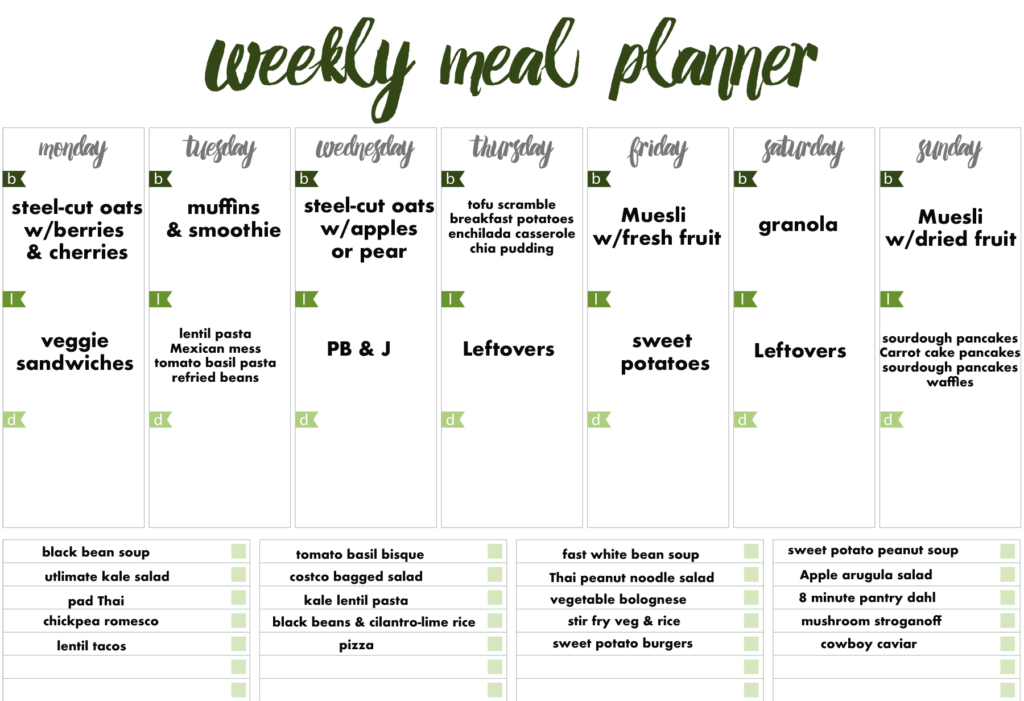
You’ll notice I don’t have dinners assigned to particular nights on a calendar. You absolutely can, of course, but I usually like to keep it flexible and decide at dinnertime the night before.
I tend to put the “fresher” recipes that use fragile produce in the first and third weeks, and the pantry/freezer recipes in the second and fourth weeks. But, don’t stress about this unless you’re really trying to minimize shopping trips like me.
Even Simpler
My advice is to go with the simplest plan that suits your family’s preferences and situation. Here are some more ideas that may work:
I know moms who have between 1 and 3 months of meals and just repeat or rotate between them. That means they don’t even have to re-make the shopping lists! Brilliant, but not a good fit for me because my husband enjoys more variety than that, and we like to change things up for different seasons.
You could have two weeks worth of dinners and repeat them to make a whole month.
I also know moms who just keep a list of their favorites in each category right there on their printable menu plan and simply circle 4 for each month.
Cook just 3 times a week and always make double. You could freeze a couple of the meals, and pull out different meals from your freezer, so you end up with more variety in your week without actually having to cook more often.
Key #4 Make Easier Shopping Lists
I want to make getting the meal plan translated into a shopping list as painless as possible. Here’s what works for us:
I make two shopping lists each month. The first is for my once-a-month big shop, and the other is for the 1-3 produce runs I make later in the month
The Big List
During the month
I like to keep at least one backup of infrequently exhausted everyday items (mustard, soy sauce, etc.) in the pantry, and whenever I open the “extra,” I add that item to my BIG shopping list. This means I hardly ever run out of anything essential mid-month, and all of these random items are already on the list by the time I am ready to meal plan.
I just have a “Note” on my iPhone, split into Costco and Winco, because those are the two stores I shop at. I add the item straight to the appropriate store’s list.
Right before I meal plan
I personally also prefer to keep “plenty” of our often used shelf-stable and freezer items on hand. That means when I add meals to my meal plan, I don’t need to account for each box of pasta or jar of diced tomatoes on my list. I always have those on the shelf ready to go.
To maintain a well-stocked pantry, I simply walk around my kitchen and pantry once a month and open the cupboards and the freezer. I glance at the level of all my staples, and if anything is at least half depleted, I add it to my list to stock up on. It takes 5-10 minutes and it gives me a lot of peace of mind. There are so many pantry meals I can make anytime when someone needs a meal dropped off, we have last-minute guests, or we don’t get to the grocery store when we thought we would.
Here are the things I always keep plenty of for my family and the plant-based diet we eat:
- whole wheat pasta of different shapes
- whole wheat flour, cornmeal
- rolled oats, rolled multigrain blend, steel-cut oats
- brown rice, quinoa
- beans & legumes
- black, white and garbanzo beans, both dried and canned
- kidney beans, canned
- pinto beans, dry
- green split peas, red lentils, brown lentils
- plant-based milk (unsweetened soy)
- tofu
- canned vegetables
- tomatoes (sauce, paste, stewed, crushed and diced)
- pumpkin
- salsa
- marinara sauce
- Long-storage vegetables
- onions
- red onions
- canned fruit
- pineapple
- applesauce
- dried fruit
- date crumbles
- dates
- raisins
- nuts and seeds
- walnuts
- almonds, sliced and whole
- sunflower seeds
- pecans
- cashews
- flaxseed
- frozen fruit
- berry blend
- “smoothie fruit” – mangos, strawberries, or tropical blend
- frozen vegetables
- corn
- peas
- mixed
When I meal plan
When I add a dish to my meal plan, I am only concerned with ingredients that are fresh produce and/or “special” in that I don’t keep them stocked. So, I just jot down the following:
Any non-typical pantry items. I keep a well-stocked pantry, but if a dish requires something I don’t keep on hand, I’ll note that on a running list that combines all recipes. That would include frozen food, bulk bins, etc. Anything that will keep a month or more that I don’t keep on hand. So I might add:
- pumpkin seeds, 1 lb
- dried apricots, 1 lb
- udon noodles, 2 packages
- fire roasted tomatoes, 4 15 oz cans
Any fresh produce items. I split these up between my BIG monthly list, and our mid-month produce list. I’ll note what it’s for as I go.
- Red bell peppers- chickpea romesco (3), vegan chili (2), fried rice (1)
- Green onions- Pad Thai (1 bunch), cowboy caviar (1 bunch)
Rounding out the shopping lists
I also always have the following two items on my both my BIG list, and my mid-month produce list:
fruit
snacking vegetables
In our family, these items are shopped for as follows:
- always bananas, preferably bunches in different shades of green and yellow
- plenty (~2 weeks) of other fruit that’s a good price. For us, that means $1/ lb or less and usually includes apples, pears, oranges, and/or grapes ($1.50/lb) depending on the time of year. Also some seasonal fruit like pomegranates, watermelon, etc. All of this is decided by price and availability once we get to the store.
- vegetables for snacks and sandwiches – this might include cucumbers, bell peppers, snap peas, green beans, baby carrots, celery (depending on price and availability. This is in addition to any required for recipes.)
Example Lists
- Fresh fruit and snacking vegetables (as above, but enough to cover the first two weeks of the month)
- The special produce needed for the first ~10 dinners, and any special produce needed for breakfasts and lunches (less common). I note these as I choose recipes for the month.
- The special non-produce items I need for the meals for the whole month. The mid-month produce list gets produce from the next chunk of meals.The random things from my pantry that I like to keep an extra of, like mustard or soy sauce.
- Pantry items that are running low
I’ll walk you how I’d add to my shopping list for the above mentioned breakfast menu:
Monday: Steel cut oats with frozen berries or cherries – We always keep both frozen fruit and steel cut oats on hand, so I don’t need to add anything to the list.
Tuesday: Muffin & smoothie – Unless I’m making a particular kind of muffin, I always have baking supplies on hand, and “always bananas” is practically a family motto, so we’ll get those at the store automatically. Ditto for the smoothie, unless I’m trying a special recipe, all I need to add to the BIG grocery list is: fresh spinach! I’ll go ahead and add this to my mid-month produce list as well, since I’m making smoothies all month.
Wednesday: Steel cut oats with apple and cinnamon or pear and ginger- Again, we have steel cut oats on hand and we always buy either pears or apples or both as part of “fresh fruit.”
Thursday: Something different (tofu scramble, breakfast potatoes, chia pudding, and black bean enchilada casserole) – Since I’m feeling fancy this month, I will need to look at the recipes for these and add the fresh ingredients to my produce lists – tofu, potatoes, peppers, an orange, cilantro, etc.
Friday: Muesli with fresh fruit – Apples are always on the list, and we keep rolled grains and soy milk on hand. We just use whatever additional fruit we have that week, so it doesn’t go on the list specifically.
Saturday: Homemade granola – I make this from dried fruit, nuts, and rolled grains, which… you guessed it, we keep on hand.
Sunday: Muesli with dried fruit – Here again, we keep everything needed as a pantry staple.
Dinner Prep
My biggest and best tip for dinner prep is just this: Check (or decide!) what’s for dinner the next night as you clean up the kitchen from the current dinner. Glance at the breakfast and lunch plan while you’re at it.
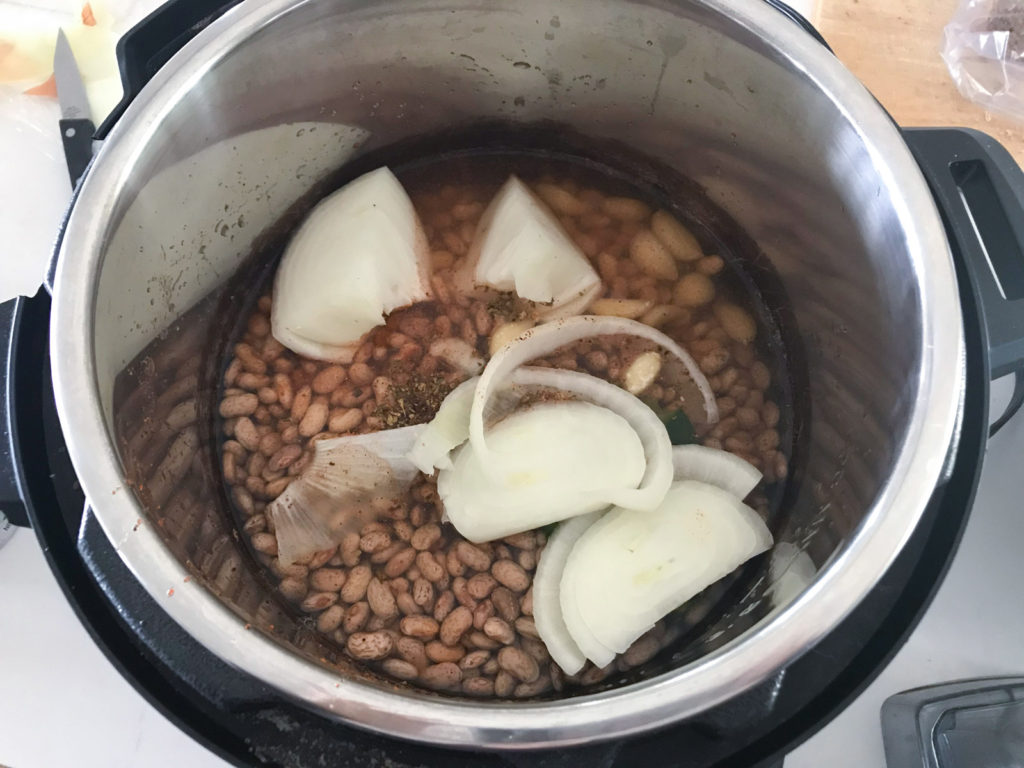
That’s it! Such a great habit that took me forever to develop.
That habit will allow you to pull things out of the freezer, soak the beans, chop something quick, pull out the recipe and set it on the counter… any little thing will help develop momentum in the right direction.
For me, the deciding is the biggest hurdle. I personally do not assign meals to specific days more than a few times a week (for guests, a busy night, or another specific purpose). Otherwise, I decide the night before from my list of dinners coming up. I pick the dish with the most perishable ingredients that sounds good and doable.
One more tip: I try to look ahead before I clean up a kitchen mess. If I have the flour out I can prep my bread loaf for the morning. If I have a cutting board out I can chop fruit for tomorrow’s breakfast or veggies for tomorrow’s lunch. I do think it’s more efficient, but importantly, it clears a psychological hurdle for me to have something “already started.”
Mid-Month
When I’m down to just a few dinners left to make and our fruit and vegetable stores are starting to wane, I start prioritizing eating up the last of our fresh produce. Then I look at the mid-month produce list and tweak it as needed. Sometimes there might be one or two non-produce items that came up despite my best-laid plans.
Then I add, just as I did for the BIG list:
fruit
snacking vegetables
So my list is already made and when we head to the store, I usually only have to shop the produce department. It’s a faster and easier trip.
Success!
If you’ve made it this far and followed along, you have two ready-to-go shopping lists, 84(!) meals planned, plus snacks. You’ve also practiced a skill that will help tremendously with future months as you work to consistently keep your pantry stocked, your table full of plants, and your family fed and happy.
It takes me about 1 hour once a month and saves me an incalculable amount of stress. It also saves money, extra trips to the store, and wasted food.
That means more time enjoying my family and less time wondering what the heck to feed them!